
The How and Why of a DIY Rain Barrel


Think of a DIY rain barrel as an investment for your green home project... One that can even contribute to LEED certification while paying off in a variety of ways.

When it comes to the plethora of eco-friendly ideas for your green building home or commercial project, a rain barrel is a relatively inexpensive investment... After all, it's just a container for capturing non-potable water. Nothing magical here.
That said, while we don't want to waste water or energy, we don't want to waste money either.
What is a Rain Barrel?
A rain barrel is simply a container for capturing rain water.
Note, the water you capture in the rain barrel is not meant to be drinkable, but you can use for irrigation and other things, like flushing toilets or if the water is filtered enough, even washing clothes.
When considering options for rain barrels, remember that the vessel you ultimately use doesn't need to be branded "rain barrel" from a store, it's just a barrel... any garbage pail is sufficient to the task. Indeed, if you pay for a barrel that's labeled "rain barrel" you'll probably be paying a premium.
Recently our local Connecticut water utility (Acquarion) announced a promotion offering to sell its customers a 60 gallon rain barrel for $75.00, which was advertised as a discount of $50.00 off of the $125.00 retail price of the rain barrel.
While $75.00 might not be that bad of a deal for a pre-fab 60 gallon rain barrel that's ready to go, if you're a fanatic about such things you can likely do better in terms of ROI (return on investment).
Rain Barrel Benefits
There is no one size fits all solution, but a rain barrel helps reduce potable water usage for tasks such as irrigation, while also minimally reducing the impact of stormwater runoff in urban/suburban areas. A 1,000 square foot roof can yield around 600 gallons of water per inch of rainfall. At today's increasing water prices, that's as much as $15.00 saved, plus the environmental benefits of capturing your rainwater for other practical uses.
Besides money, what else can rain barrels help with? Remember the Virginia water contamination debacle that occurred in the not-so-distant past? With a rain barrel, you provide yourself with at least some additional freedom and safety should your local water source ever be struck by contamination.
Also by collecting and recycling rainwater in a rain barrel, you’re making a small effort to mitigate stormwater runoff. Particularly if you live in an urban area, there’s a good chance that the water you collected would otherwise just collect debris, such as gasoline, trash and pet waste on the nearby asphalt before being dumped back into the sewer system or nearby waterways, creating incremental water pollution challenges.
The Dollars and Sense of Rain Barrels
Of course, how much you save in dollars is determined by several factors: the size of your rain barrel, how much water you normally use in your household and the state/local rate you pay for your municipal/utility water. It also matters what you pay for the rain barrel up front.
One thing's for sure, water prices are going up.
According to McGraw Hill Financial, water and sewer utility bills have been increasing at a rate faster than inflation since 2000 and are likely to continue to rise given the sector’s substantial investment needs.
Also recent 2013 study by Circle of Blue found that water rates are as much as $.025 per gallon in some states. However, most states do not charge a flat fee for water usage across the board. What you pay for water is typically calculated based on your home's total consumption (i.e. you'll pay more per gallon if you use more). Below is a table showing what Circle of Blue predicts that a family of four would be expected to pay each month in 2013 based on their water usage.
Based on the rate of $.025 per gallon, a rain barrel that collects 500 gallons per year (filling it 8.33 times per year) would generate a savings of roughly $12.50/year. In the case of the Acquarion offer (from my local utility above), if the rain barrel cost $75.00, it would take roughly 6 years to pay off.
However, a less expensive DIY rain barrel can be had for around $50.00, or even less than $20.00 if you already have a garbage pail that you can reuse.
A new 44 gallon trash container can be purchased online for as little as $25.00 and then you'll need some additional parts which can be bought at a hardware store for around $15.00. Note: when choosing a garbage pail to use for your rain barrel, choose a relatively thick walled one, as opposed to one that is very thin. The weight of a full rain barrel can cause a thin walled barrel to be more likely to tip or spill. Using a heavier gauge barrel will help with stability. To make an inexpensive DIY version of a rain barrel, you'll need the following:
- Large barrel (garbage pail/trashcan or storage vessel)
- Waterproof caulk or sealant
- 2 rubber washers
- 2 metal washers
- 1 hose clamp
- 1 spigot
- 1 drill
Some additional tools, such as a coping saw, a hacksaw or box cutter may be needed as well to make adjustments to your downspout. This is to make sure water is deposited directly from your roof into your rain barrel. In this case you'll just need to trim your downspout above the height of your rain barrel lid and reattach the curved part of the downspout so the water is directed into the rain barrel. You can also purchase flexible plastic tubing from Lowes or Home Depot for around $5.00.
Of course if you want a free garbage can or rain barrel, there are options too. Try contacting your local car wash as they may have empty barrels from soap or car cleaning supplies, or visit your local transfer station (recycling and/or disposal center) and look for discarded garbage pails with no holes in the bottom.
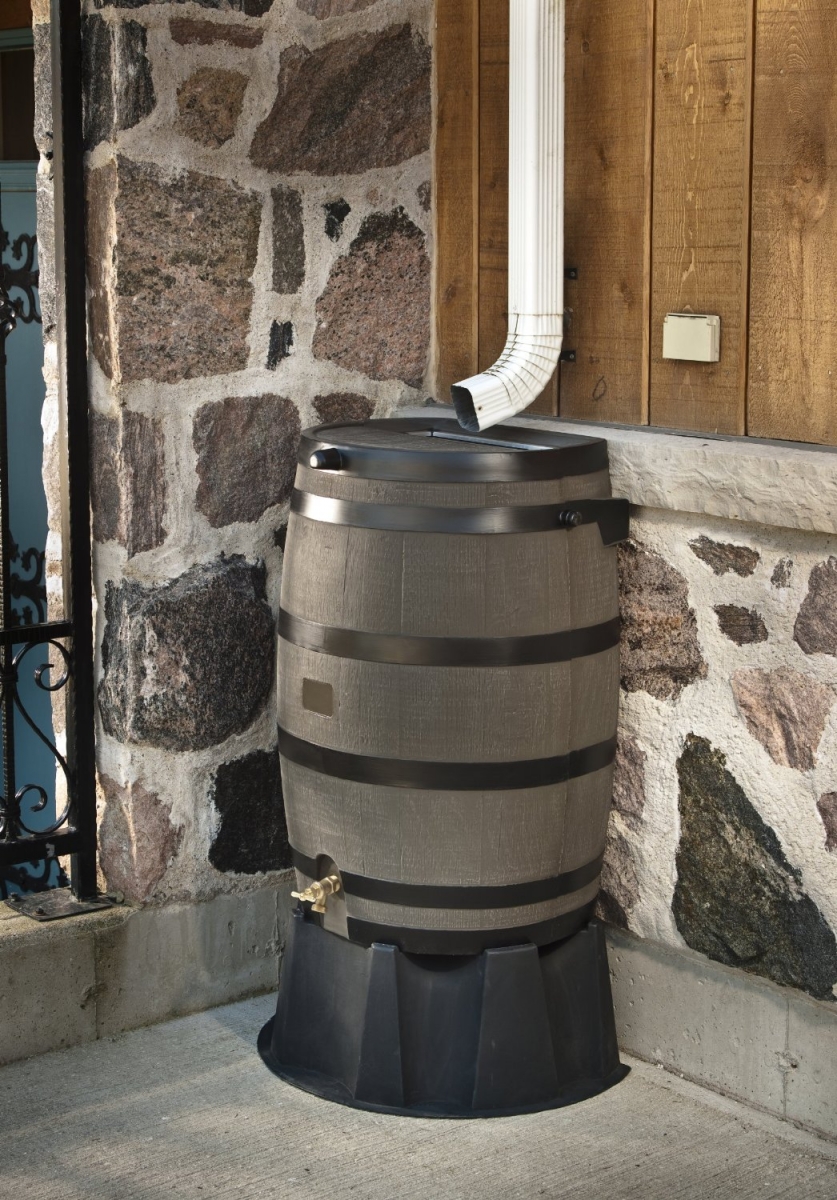
There are also higher end model rain barrels. For instance, Amazon.com offers a nice looking wooden style model complete with a base for $115.00. Longer payback, but if you're looking to sell your green home to an eco-conscious buyer, this may pay for itself in more than the water you save.

Qualified Preparer of Stormwater Training and Certification Course: As a QPSWPPP, you will receive a dual credential as a QCIS, which qualifies you to inspect and maintain construction sites for stormwater compliance. This program covers the principles and practices of erosion and sediment control as well as the proper reporting and documentation requirements for ensuring compliance under the NPDES permitting program.
Connect.
Find LEED consultants and professionals with green building skills and experience.
Meet Pros.


Learn.
Relevant education and training to consider.
News.


Why join Poplar Network?

- Learn about green building
- Save on LEED exam prep
- FREE continuing education
- Join the conversation
- Connect with peers