
How to Green Your Pavement


You can green your pavement by choosing pervious or porous paving material with a high SRI.
Traditional pavement surfaces, such as concrete and asphalt, are a barrier between stormwater and the natural environment. This stormwater, also called runoff, is channeled through curbs and gutters and collected in the municipal stormwater system. Unfortunately, on its way to the municipal stormwater system, this runoff collects debris and pollutants that were on the pavement such as oil and gasoline. In a large storm event, runoff can even cause disasters like flooding and landslides.
Porous pavement reduces the volume of stormwater runoff by allowing water to filter through pavement and into the soil. The pavement itself also acts as a filter to such pollutants and suspended solids.
In order for porous pavements to function properly, certain conditions are needed. High soil permeability, relatively flat grades on site, and low water tables and bedrock are all necessary for porous pavements to achieve the desired performance (1). Soils largely consisting of clays are not very pervious and will not allow water from porous pavement to infiltrate the soil and then recharge the groundwater (2). Infiltration rates of at least 0.5 inches per hour are recommended for porous pavement applications (3).
Types of Porous Pavement
There are numerous types of porous pavements available today, including structural turf, paving stones, and porous asphalt and concrete.
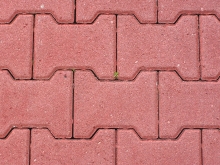
Structural turf has the appearance of grass but with a strong enough base to support vehicular traffic. This type of porous pavement may be most useful in parking lots and at places like sporting events. Paving stones are just bricks or stones arranged with spaces in between to allow the water to flow through.
Porous asphalt and concrete are just as they sound, very similar to regular asphalt and concrete but allow water to penetrate through to the soil below.
Another advantage of some porous pavements is reduction of the urban heat island effect. Structural turf will greatly reduce the increase in temperature that comes with traditional pavements.
Porous pavements may help earn points towards several LEED credits as well. In the LEED-NC 2009 rating system, using these types of pavement products could potentially earn such credits as SS Credit 6.1, (Stormwater Design – Quantity Control), SS Credit 6.2, (Stormwater Design – Quality Control), SS Credit 7.1 (Heat Island Effect – Nonroof), and possibly even an Innovation in Design credit.
Disadvantages of Pervious Pavement
As with any new technology, there are some disadvantages to using porous pavements. They do have a higher initial cost than traditional pavements, and some people have been turned off by reports of failures of certain types of porous pavements. As stated above, not every soil condition and type is perfect for these types of pavements. As we have written about earlier on Green-Buildings.com, northern climates may not be the best suited for these types of applications either due to the pavement's freeze-thaw cycle. But as the technology becomes better known and more contractors get familiar with installing and maintaining porous pavements, failures will become less common. More often than not, when overall life cycle costs are taken into account including stormwater management, porous pavements may be less expensive than traditional pavements.
Overall, porous pavements are a great technology that will help reduce stormwater runoff as well as the urban heat island effect, and will help earn 3-4 LEED points in the process. In the end, the lifecycle cost of these products should be less than traditional pavements when stormwater management is taken into account. While not applicable in every climate, porous pavements are good candidates when designing a new pavement system.
Heat Island Effect: High SRI
Another way to “green” your pavement is to install pavements with a high Solar Reflective Index (SRI) of at least 29. This will help reduce the Urban Heat Island Effect as well. White Portland cement tends to have a high SRI, while black asphalt has a very low SRI. A cement parking lot will be much cooler than the same parking lot made of asphalt. An even greener version would be a cement parking lot made of recycled fly ash instead of Portland cement. Another way to reduce the temperature of large paving surfaces is to provide plenty of shade from large trees.
1: (Schueler, 1987) 2: (Boyer, 2005) 3: (EPA, 1999)

Qualified Preparer of Stormwater Training and Certification Course: As a QPSWPPP, you will receive a dual credential as a QCIS, which qualifies you to inspect and maintain construction sites for stormwater compliance. This program covers the principles and practices of erosion and sediment control as well as the proper reporting and documentation requirements for ensuring compliance under the NPDES permitting program.
Connect.
Find LEED consultants and professionals with green building skills and experience.
Meet Pros.


Learn.
Relevant education and training to consider.
News.


Why join Poplar Network?

- Learn about green building
- Save on LEED exam prep
- FREE continuing education
- Join the conversation
- Connect with peers