
It’s a Window. It’s a Solar Panel. No, It’s Both!


Rumors of truly transparent solar panels that could double as windows and other potential applications are abuzz. (iPhone 7 or Tesla sunroof, anyone?)
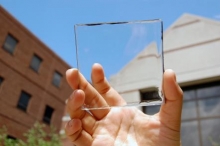
“Transparent luminescent solar concentrators.” A mouthful to be sure... but it sounds pretty nifty, right?
That’s because it is...
And nifty is precisely what a team of MIT and Michigan State University (and other folks) are calling their newest invention. To put it more simply, they’ve developed completely transparent solar panels!
The team is one of several pursuing technology that could make windows double as solar panels. Recently, researchers at Los Alamos National Laboratory and the University of Milano-Bicocca were also able to capture the sun's energy using what they referred to as "Quantum Dots".
Controversy Around Glazing and Green Building
Many experts in the green building world believe that windows (aka "glazing") are an energy sucking nightmare when it comes to designing for efficiency. As LEED rated buildings grow ever taller, environmentalists also worry that glass facades contribute to an abnormally high rate of death among migrating birds due to errant collisions. But for better or worse, windows are a coveted design feature among high profile architects working on LEED projects. Just take One Bryant Park for instance.
That said, because windows are often exposed to natural light for much of the day, while providing building occupants with a connection to the outdoor environment (via daylight and views)... the development of a technology that could harness sunlight, while not detracting from this connection to the outdoors, is a potentially major development in terms of energy production.
“No one wants to sit behind colored glass,” lead researcher Richard Lunt told reporters last year. And, indeed, according to the new LEED v4 guidelines, colored glass very much impacts the quality of an occupant’s view to the outside world.
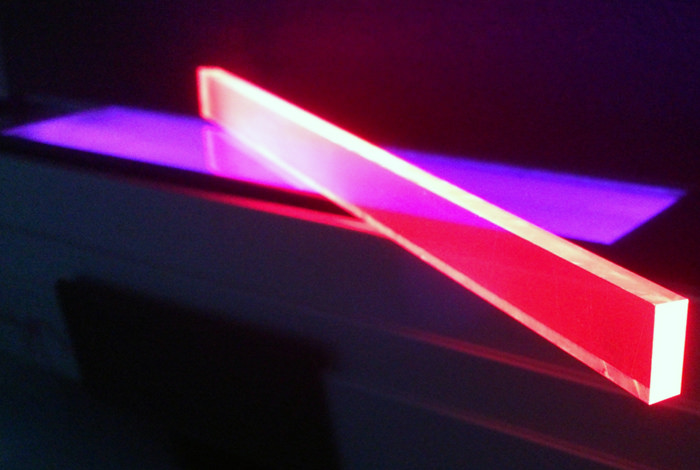
The working prototype is completely transparent with extraordinarily thin strips of photovoltaic cells within (Yes, if you look that closely, you can actually tell they’re there with the naked eye). These cells utilize organic salts that convert certain invisible light to infrared light that is then transferred into power.
While the prototype offers a mere 1% solar conversion rate (current non-transparent laminators top out around 7% while more standard black photovoltaic panels offer around 15%), the team expects to achieve a 5% rate with continuous optimization. They’re also confident that the solution will be functional in a wide variety of settings – from tall, glass-laden skyscrapers to a sunroof in an electric vehicle to the palm-sized screens of smart phones (Believe it or not there is already a rumor that we’ll see this glass on the iPhone 7!).
The concept itself is far from new, but that it’s been realized within a truly transparent material is. The implications of an improved conversion rate would be momentous, as essentially any and every glass surface could become an energy-producing product. Recent innovations in the development of perovskite an abundant mineral that is potentially superior to silicon in both cost and effectiveness, could possibly help spur things along in transparent solar panels as well.
“Ultimately, we want to make solar harvesting surfaces that you do not even know are there,” Lunt said.
Sounds like a plan!
Connect.
Find LEED consultants and professionals with green building skills and experience.
Meet Pros.


Learn.
Relevant education and training to consider.
News.


Q&A.


Free Tools

Why join Poplar Network?

- Learn about green building
- Save on LEED exam prep
- FREE continuing education
- Join the conversation
- Connect with peers