
Will Perovskite Brighten the Future of Solar Energy?


Thanks to perovskite, commercial and residential solar energy may have a brighter future than expected.
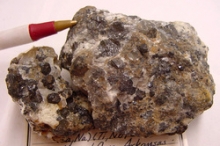
Breakthroughs in perovskite performance could make solar power more affordable than ever. So, say goodbye to silicon?
No one could blame you if you've never heard of perovskite... So here goes. Perovskite is an abundant mineral (calcium titanium oxide) that can be used to make solar panels. Perovskite is potentially superior to silicon... less expensive and equally effective in high-efficiency commercial photovoltaics. Perovskite is cheaper to obtain than silicon, and cheaper to use.
Perovskite can act as a semiconductor and has light-absorbing properties. Whereas conventional silicon cells require silicon layers of approximately 180 micrometers, perovskite is capable of absorbing the same amount of light at less than one micrometer.
While it has been around for awhile, recently scientists, and entrepreneurs, have become more bullish on perovskite because of its efficiency and effectiveness. Indeed, a report by Kevin Bullis in the MIT Technology Review indicates:
"Researchers developing the technology say that it could lead to solar panels that cost just 10 to 20 cents per watt. Solar panels now typically cost about 75 cents a watt, and the U.S. Department of Energy says 50 cents per watt will allow solar power to compete with fossil fuel."
UC Berkeley's SunShot Initiative, which seeks to make solar energy competitive with other forms of electricity by the end of the decade is predicting that perovskite could make the difference.
Implications for Perovskite Solar Affordability
Perovskite was discovered in 1839 in the Ural Mountains of Russia. However it can be found today in many other places on Earth, including Kansas, USA, Germany, Sweden and Switzerland. However, it was not until 2009 that experimentation with potential applications for perovskite in solar photovoltaics began.
Current silicon-based solar PV panels are efficient to 20-30%, meaning they cannot convert 70-80% of the sunlight that they capture into energy. When perovskite applications in solar PV commenced in 2009, efficiencies of only 3.5% were achieved... However, this appears to be improving rapidly.
Working with perovskite, prominent Swiss researcher Michael Grätzel, formerly of UC Berkeley and inventor of the eponymous "Grätzel cell", a dye-sensitized solar (DSC) cell, has produced perovskite-based solar cells that convert 15 percent of the energy in sunlight into electricity and researchers are optimistic that efficiency of the perovskite solar cells may achieve 20-25% in a lab environment. This would achieve current silicon PV efficiency range, but at a fraction of the cost.
Perovskite May be a "Dirt Cheap" High Efficiency Solar Material
While the cost of solar is reaching parity with the grid, observers of recent advancements in solar power seem fall into one of two camps:
1) That using renewables, such as solar energy, to replace fossil fuel energy is a pipe dream
2) That it could happen, but it will likely take decades.
However, advances in the applied use of perovskite could not only accelerate the timetable for achieving grid parity, but also offer new entrepreneurial applications that were not previously deemed practical.
Perovskite Cowboys
Entrepreneurs are working on applications in building integrated photovoltaics (BIPV) and other enhancements. For instance, Oxford Photovoltaics, an Oxford, UK-based PV technology firm, is building on the success of low cost dye-sensitized solar cells invented by Professor Grätzel to develop a solid state dye sensitized solar cell that radically improves the aesthetics, performance and cost of BIPV systems. Dr. Henry Snaith, founder of Oxford PV and its Chief Scientific Officer, worked under Professor Grätzel at École Polytechnique Fédérale de Lausanne (EPFL). While completing his post doctoral research at EPFL, Dr. Snaith focused on both developing the technology behind, and understanding the operation of, solid-state DSCs. He eventually pushed the solar power conversion efficiency of DSCs beyond 5%.
Guardian reporter Mark Miodownik recently attended a conference on scientific materials research where the perovskite breakthrough was discussed and called the news of perovskite performance revolutionary and, "radically new". Other renewable/green industry observers seem bullish on perovskite. Pete Danko from Earth Techling calls perovskite the "holy grail" of solar cell materials and goes on to report:
"The high-water mark for efficiency using perovskite pigment solar cells came just a few weeks ago with the announcement of a 14.1 percent conversion research-cell performance by Michael Grätzel and his team at École Polytechnique Fédérale de Lausanne (EPFL). This is a far cry from the 3.8 percent efficiency achieved in 2009, and it’s that rapid improvement that has people excited. Bullis reports that researcher now think efficiencies in the 20-25 percent range – on a par with conventional cells in the lab – are well within reach."
Ryan Whitwam over at Extreme Tech says:
"The key to making perovskite solar technology workable is how cheap it is — really, it’s dirt cheap. Perovskite deposits are found all over the world in a variety of geological conditions, and it’s a simple process to turn the mineral into a pigment formulation."
Simon Redfern at BBC reports:
"As well as lying at the heart of new solar cells, perovksite is the most abundant mineral in the rocky parts of our planet. It is the name given to a whole family of ceramic materials that are used in a huge number of modern technologies."
Eric Wesoff at GreenTechMedia reports that Ultrasolar, a California startup is developing technology leveraging the properties of perovskite to achieve greater effectiveness and efficiencies of solar:
"A potential gain of 20 percent to 30 percent in power production is serious business. It would improve the yield of the power plant, the return for investors, and use less land for the same given output."
Challenges Facing Perovskite
As mentioned above, almost all conventional solar PV applications are based on silicon technology. Silicon PV is an accepted, indeed entrenched, and mature industry. Also, silicon-based PV has been falling rapidly in price and is predicted to continue to do so. Perovskite also contains a small amount of toxic lead, which would need to be recycled if the amount is deemed dangerous.
That said, disruption and a bifurcated market could occur in PV if companies, such as Oxford PV, succeed and profit. Though it is a nascent, somewhat unknown market, BIPV is viewed by some in the building industry as highly attractive because it combines "green building" with solar, two rapidly advancing industries. Navigant (formerly Pike Research) predicts that the BIPV market is set to become one of the fastest-growing segments in the sector, with up to 4.6 GW of installations forecast through 2017. Also, the advancement of efficient manufacturing technologies, such as robotics, in automated PV production plants could help the acceleration and adoption of perovskite-based PV.
More importantly, in the United States, where solar adoption is so closely tied to incentives bestowed on the industry by our broken political system, a low cost technology that is embraced by creative, leading entrepreneurs, such as Elon Musk, could be a game changer. For instance, if someone had told me 10 years ago (the amount of time it might take to establish a mass-produced PV product that competes with silicon) that an American car company would be only get me excited, but also that its CEO would be the inspiration for Tony Stark in the Iron Man movie and be the raging darling of Wall Street, I would have thought they were delusional. However, that's what's happening. It is possible that applications could be developed with perovskite that exceed our current expectations, such as a perovskite-based paint.
It is simply impossible to predict what opportunities may arise from perovskite. Developments and discoveries such as the potential for perovskite are consistent with Matt Ridley's Rational Optimist view of evolving prosperity stating that, in essence, we do not know what advances lie around the corner for us.
This article was originally published on RobFreeman.com
Connect.
Find LEED consultants and professionals with green building skills and experience.
Meet Pros.


Learn.
Relevant education and training to consider.
News.


Q&A.


Free Tools

Why join Poplar Network?

- Learn about green building
- Save on LEED exam prep
- Gain continuing education
- Join the conversation
- Connect with peers