
Mirror, Mirror on the Wall... Will Solar Be the Fairest After 2016?


The Solar Investment Tax Credit (SITC) directly affects the green building industry. Here’s what you need to know to help keep this important financial incentive around.
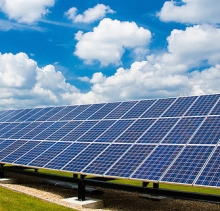
Two of the most important federal policies for the solar power industry are the 2006 Business Energy Investment Tax Credit (ITC) and the Residential Renewable Energy Tax Credit, collectively referred to herein as the ITC.
If you're not familiar with the ITC, it was conceived back in 2006, when a number of sustainability-focused organizations recognized the potential to drive U.S. domestic energy independence and create jobs and pushed for Congress to initially pass a bill.
Then, in 2008 Congress approved an eight year extension of the ITC to 2016... But as 2016 is just around the corner, the ITC will soon be back on the table for government vote.
Since its inception, the ITC has not only helped thousands of home and commercial building owners save on their electricity by leveraging power purchase agreements (PPAs) and other end user financing models to affordably harness the sun's energy.
The ITC has also been a boon to domestic job creation.
How Has the Solar Investment Tax Credit Helped Create Jobs?
Currently, the solar ITC offers a 30% tax credit for both residential and commercial properties. This program has helped spur the demand for solar energy, which, in turn, has helped solar become more and more affordable. This needs to continue to further promote energy independence in the United States, and encourage individual freedom in our energy choices.
The U.S. solar industry provides American jobs that can't be outsourced. According to the Solar Energy Industries Association (SEIA), the U.S. solar industry has grown from 15,000 employees in 2005 to more than 143,000 today. Employees work at more than 6,100 companies, the vast majority being small businesses, across all 50 states.
The ITC has also helped drive the cost of solar down to levels approaching grid parity.
Grid parity occurs when "an alternative energy source can generate electricity at a levelized cost (LCoE) that is less than or equal to the price of purchasing power from the electrical grid. The term is most commonly used when discussing renewable energy sources, notably solar power and wind power."
Indeed, according to Avishal Shah, an analyst at Deutsche Bank, the cost of solar will approach or be at parity with fossil fuel in most states by 2016.
Demand is partially responsible for this increasing grid parity. But, as solar photovoltaics are a technology (not a fuel, per se) and based on hardware advancements, the laws of technology also play a role.
Even when we reach grid parity, as Moore's Law dictates, the cost of solar should become even less expensive over time.
Work in Real Estate? Here's Why You Should Care
Let's face it... If you work in any aspect of building, design or construction, you work in the green building industry.
The green building industry is simply the entire building industry with a hyper focus on efficiency. And after the financial meltdown of 2008, it's been one of the only really recession proof segments of our "built environment economy".
Simply put, the solar ITC dramatically reduces the total cost of purchasing and installing solar power, a component of green power and on-site renewable energy. With the ITC in place, demand for solar will be greater than without it in place, providing stabilization to our market and an incentive for further innovation within the industry (read increasingly lower prices).
Without the solar ITC at it’s current level (it won’t completely disappear in 2016, but will shrink to a mere 10% credit), total costs will inflate, possibly pushing solar out of certain design budgets, and the level of demand will expectedly fall.
Perhaps even more threatening, however, is the pull back on investment funds into this and other renewable energies, and building technologies – especially given that the well seems to be getting drier and drier as is.
How can you help? Whether you're a professional engineer (PE), architect, designer, or contractor it's important to remember that the ITC directly or indirectly impacts the building industry. As such, it's important to remain vigilant of such policy changes and actively spread awareness.
However, to help ensure that this credit receives the extension it deserves, awareness is not enough. We need to reach out to our elected officials and remind them of how critical this policy is to the building industry.
The Solar Energy Industries Association (SEIA) recently announced at the Solar Power International (SPI) it will be actively engaged with a national campaign set to debut in mid-2015.
“Since the United States first began incentivizing energy development, the average annual subsidy has been $4.8 billion for oil and gas, compared to just $370 million for all renewable technologies,” SEIA President and CEO Rhone Resch remarked, “We’ve gone from an $800-million industry in 2006 to a $15-billion industry today.”
To be fair, our elected officials haven’t been completely out of the loop on this. During 2014, both the House and Senate introduced legislation aimed at extending the policy. What’s more, the Renewable Energy Parity Act of 2014 was introduced which would allow developers to qualify for the credit so long as construction was in place before the policy end-date, as opposed to requiring full operation.
Nevertheless, our currently gridlocked Congress makes progress difficult and most assuredly uncertain. Reach out to your representatives today to tell them that the solar ITC matters!
Connect.
Find LEED consultants and professionals with green building skills and experience.
Meet Pros.


Learn.
Relevant education and training to consider.
News.


Q&A.


Free Tools

Why join Poplar Network?

- Learn about green building
- Save on LEED exam prep
- FREE continuing education
- Join the conversation
- Connect with peers