
What are the Most Popular LEED Credits?


Wondering what other LEED professionals are pursuing in their green building designs? Here’s an overview of the most popular LEED credits.
Wondering where the low hanging fruit is in regard to LEED credits? A report titled "LEED in Motion: Impacts and Innovation" issued by the USGBC at this time last year may shed some light on exactly that.
The report provides insight on which LEED credits are most commonly pursued. If you're new to green building, and considering LEED certification, this information may help professionals who are new to LEED better plan for their building certification projects.
LEED offers multiple rating systems, such as New Construction and Existing Buildings, that are referenced within broader LEED categories, including Building Design and Construction (BD+C) and Building Operations and Maintenance (O+M), which are the most popular rating systems, respectively.
Here's some info on the most popular credits within those rating systems:
LEED for New Construction
For New Construction projects, the following were the most common credits:
#1 EA Optimized Energy Performance (98% of projects): Wondering why most projects pursue this credit? Well, it's the "Big Kahuna", so to speak, of reduced cost in LEED building operations.
Not only is this credit an opportunity to achieve a ton of points in either LEED 2009 or LEED v4, but it could also have the biggest impact on both efficiency and reduced operating costs.
LEED v4 projects can pursue the credit through either a whole building energy simulation (option 1) or a prescriptive approach using the ASHRAE Advanced Energy Design Guide (option 2), LEED projects must demonstrate an increased level of energy performance beyond the prerequisite. (1-18 credits)
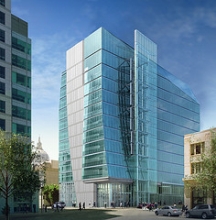
The San Francisco Public Utilities Commission (PUC) Building, designed by KMD Architects, uses multiple strategies to conserve energy and optimize energy performance, including the use of small wind turbines and solar photovoltaics.
#2 EQ Low Emitting Materials (95% of projects): The purpose of this credit is to reduce concentrations of chemical contaminants that can damage air quality, negatively impact human health and productivity, and/or harm the environment.
LEED v4 projects have two options to achieve this credit, either through completing Product Category Calculations (Option 1) or through the "Budget Calculation Method" (Option 2). In either case, the objective is to demonstrate that extra care has been taken in the choice of paints, adhesives, flooring, furniture and/or other categories. (1-3 credits)
#3 EQ Construction Indoor Air Quality (IAQ) Management Plan (92% of projects): The intent of the Construction IAQ Management Plan is to promote the well-being of construction workers and building occupants by minimizing indoor air quality problems associated with construction and renovation.
To achieve this credit, projects must develop and implement SMACNA control measures in the form of a indoor air quality management plan or detailed checklist. (1-3 credits)
LEED for Existing Buildings
When it comes to existing buildings, here are the top contenders for most popular LEED credits:
#1 Optimize Energy Performance (87% of projects): Just like in New Construction, LEED Existing Buildings projects can earn up to 18 points by achieving this credit. The intent of the credit is to achieve increasing levels of operating energy performance, relative to typical buildings of similar type, to reduce environmental and economic impacts associated with excessive energy use.
Projects achieve this credit through demonstrating one of two cases: 1) that they are eligible for an ENERGY STAR rating, through EPA's Portfolio Manager tool, or 2) if the building is not eligible for an ENERGY STAR rating, the project team can benchmark the building's operating performance as being better than 71% of similar buildings (71st percentile or better) using data provided by the EPA ENERGY STAR Portfolio Manager tool.
In the latter case, buildings that are not suited for this approach can choose to have privately owned whole building energy meters installed and provide a full 12 months of continuous measured energy data.
#2 Additional Indoor Plumbing Fixture and Fitting Efficiency (85% of projects): The intent of this credit is to maximize indoor plumbing fixture and fitting efficiency within buildings to reduce the use of potable water and the resulting incremental burden on municipal water supply and wastewater systems.
Most projects achieve this through strategies including the use of automatic plumbing controls for toilets, sinks, showers, faucets, etc. controls, by specifying water conserving indoor plumbing fixtures and fittings that exceed the UPC 2006, or International Plumbing Codes of 2006 and other ultra high efficiency water conservation technologies.
#3 Green Cleaning: High Performance Cleaning Program (85% of projects): The intent of green cleaning is to reduce the exposure of building occupants and maintenance personnel to potentially hazardous chemical, biological and particulate contaminants, which can adversely affect air quality, human health, building finishes, building systems and the environment.
In addition to meeting the Prerequisite for Green Cleaning, buildings must have in place a program that takes into consideration policies, staffing plans, standard operating procedures and storage procedures that address sustainable and effective cleaning.
Innovation Credits
But perhaps you’re not looking for low-hanging LEED fruit, per se, and instead wish to try something new, something completely new.
In that case, you ought to look to the four available points within the Innovation credit category.
And while trying something completely new sounds tough, between 90-95.9% of LEED v2009 projects achieved points for Innovation in Design or Innovation in Operations, which requires “exceptional efforts” but is hardly out of the realm of possibility.
By striving toward a combination of piloted technologies from the USGBC LEED Pilot Credit Library, an innovative strategy, and/or exemplary performance criteria, a new building can achieve up to 5 points. The only significant change from v2009 to v4 is that exemplary performance is now eligible for only two, not three, points.
Looking for innovative inspiration? For those projects that earned innovative credits under v2009 but weren’t fully incorporated into the revisions of v4, take a peek at the innovation catalog. There you’ll find broadly applicable concepts like Green Building Education (sharing the environmental message of your project) and more niche tactics like Mold Prevention in schools (creating an environment with 60% or less humidity).
In both LEED 2009 and LEED v4, an Innovation point exists for the LEED Accredited Professional. In LEED 2009 any LEED AP (Legacy or with Specialty) can earn an Innovation point, however with LEED v4 only those LEED APs with Specialty are eligible. Projects that pursue this point can attain 1 point by simply by including a LEED AP on the project team.
Connect.
Find LEED consultants and professionals with green building skills and experience.
Meet Pros.


Learn.
Relevant education and training to consider.
News.


LEED AP Exam Prep


LEED Professional Project Experience

Why join Poplar Network?

- Learn about green building
- Save on LEED exam prep
- FREE continuing education
- Join the conversation
- Connect with peers