
Is There an (Unexpected) Downside to Cool Roofs?


Could cool roofs actually have a negative impact on the environment? One new study sheds light on a few downsides...but don’t walk away from this LEED friendly solution just yet!
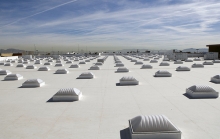
After they paved paradise and put up parking lots in places that have since become sprawling urban areas, inhabitants began realizing how hot roofs could become. And when there are so many roofs in such a small geographic space, the environmental impact can be severe. Cool and garden roofs have been touted as a practical solution, calling on reflective and natural surfaces instead of asphalt, shingles and tar.
However, a recent study published in the Proceeding of the National Academy of Sciences expresses potential concerns over aggressive adoption of these policies. Why would widespread use of a solution that reduces greenhouse gases be a bad thing? Read on!
Well, first, it may not actually reduce greenhouse gas emissions, depending on the location. In fact, the study highlights the possibilities that in some climates, cool roofs could actually reduce annual energy savings. While cool roofs have a net-zero impact during the summer, the researchers found through their urban population extrapolation that the continuation of reflected sunlight in the winter months could actually cool the ambient air more than a green or traditional roof and subsequently increase energy usage for the higher heating demand.
In addition, the study raises noteworthy concerns over a negative impact on rainfall. In a study published by the same researchers just last year that examined Arizona’s Sun Corridor and extrapolated the relevant data to 2050, full adoption of cool roof technology would lead to a 4% decrease in rainfall. This 4% would be in addition to the 12% reduction in rainfall as a direct result of population growth and urban development.
“There are trade-offs that need to be considered,” stated lead researcher and sustainability scientist at Arizona State University Matei Georgescu, “We don’t yet know enough about the various trade-offs.”
Finally, in a study conducted by two Stanford researchers last year, a global adoption of cool roofs was found to have the potential not only to hinder cloud formation, but also to cause black soot to reradiate the reflected light as additional heat.
All in all, these studies do shed light on information that, before, was unclear. However, 100% implementation of cool roofing technology is a long, long way off and these studies, along with dozens more, indicate the myriad benefits of cool roofs, so it shouldn’t deter anyone from leveraging the eco-friendly solution today - anywhere. Don’t trust me? Let’s compromise. Opt instead for just a middle of the road option with a garden roof.
Connect.
Find LEED consultants and professionals with green building skills and experience.
Meet Pros.


Learn.
Relevant education and training to consider.
News.


Why join Poplar Network?

- Learn about green building
- Save on LEED exam prep
- FREE continuing education
- Join the conversation
- Connect with peers