
Paper Towels vs. High-Speed Hand Dryers: Which are Greener?

High speed electric hand dryers have been introduced to the restrooms of green buildings as a more sustainable alternative to paper towels. Are they greener? If so, why?
Hand dryer companies such as Excel Dryer (manufacturer of the XLerator®) and Dyson (manufacturer of the Dyson Airblade™) argue that by air drying your hands, you reduce the amount of energy used to generate paper towels that are used once and then thrown into a landfill.
However, when you consider the true sustainability of a product, it is important to consider the entire embodied energy used during the life of the product, from start to finish.
Unfortunately, this is like comparing apples to oranges.
Paper towels and electric hand dryers are nothing alike, therefore comparing them requires a deeper examination of their manufacturing processes and environmental impacts by engaging in a life cycle assessment (LCA).
A LCA is a comprehensive framework for evaluating the environmental impact of a product from its inception to retirement, or end of use, according to the ISO 14000 standard.
MIT Research on Recycled Paper Towels vs. Hand Dryers
There are many variables to consider when conducting a life cycle assessment of paper towels vs. hand dryers.
Luckily, the Materials Systems Laboratory at MIT conducted a peer reviewed comparison and analysis of paper towels versus a range of hand dryers, from conventional warm air hand dryers to the high speed Dyson Airblade to the XLerator, and examined them both using an LCA methodology.
The MIT study was commissioned by Dyson.
Overall MIT found that paper towels contribute the most to environmental impact, including not only the pulp production and paper towel manufacturing, but also the product packaging, dispensers, waste bins and bin liners used to dispose of the towels.
The MIT study found that while paper towels are produced in commercialized forests that emphasize fast growing trees that are easily replanted, there still remains the issue of the transportation of harvested materials.
The transportation of wood and/or pulp material across the country results in the burning of large amounts of fossil fuels and the processing of the materials into the final paper product leads to more emissions. The process also uses large quantities of water — more than you use to wash your hands.
The manufacturing of paper towels used over half of the overall energy, followed by production and transportation.
Recycled paper towels were found to have a lower impact than virgin paper towels across a range of metrics, including human health, global warming potential (GWP) and water consumption.
Electric Hand Dryers
Currently, the best two electric hand dryers on the market are the Dyson Airblade and the XLerator, which both claim to be at least 80% more efficient than the conventional hand dryer. They are designed so that they require less energy to operate and also require less time to effectively dry.
According to the MIT study, the two Dyson Airblade hand dryer systems are associated with the lowest GWPs of all the hand‐drying systems, followed by the XLerator system.
However, the XLerator system was very close to all of the Dyson Airblades when factoring in speed of hand drying.
Excel conducted its own LCA to determine the impact of its XLerator hand dryers and the impact was clearly in favor of the XLerator when compared to conventional hand dryers and paper towels, as can be seen above. Of note is that the XLerator also took less than half the time of the conventional hand dryer to get the job done.
Excel Dryers concluded that in order to dry 26,000 pairs of hands, one XLerator used 1381 kWh of electricity as compared to 5108 kWh of electricity used by a conventional dryer. This is compared to the 37,960 m2 of paper towels needed to do the same.
Of course electric hand dryers do have environmental costs associated with production including the energy used in the manufacturing the different parts of the hand dryers, water input, and the fossil fuels burned during transportation.
However, this portion of the life cycle is less intensive than paper towels given the longer lifespan of the dryer. Instead, the majority of the impact occurs during the use of the electric dryer, as can be seen by the purple color in the chart above.
The majority of these dryers depend on the power grid, so the operating environmental impact depends on what type of fuel is burned to produce that electricity. This is the main consideration when comparing the impact of paper towels to electric hand dryers.
LEED v4 Credits and Hand Dryers
An earlier article by Green-Buildings.com evaluated the potential LEED 2009 credits available for hand dryers such as XLerator and Dyson Airblade are eligible to earn credits in the BD+C Energy & Atmosphere credit category as well as various credits in the LEED O+M rating system.
The XLerator is also listed as a GREENSPEC certified product.
While high speed electric hand dryers like Dyson Airblade and the XLerator are superior to conventional dryers and paper towels and will decrease your carbon footprint, they are not perfect. The MIT study also cautioned against making sweeping judgments of which dryer was the best for every task.
Perhaps the “greenest” option of them all is simple air drying without the use of mechanical devices.
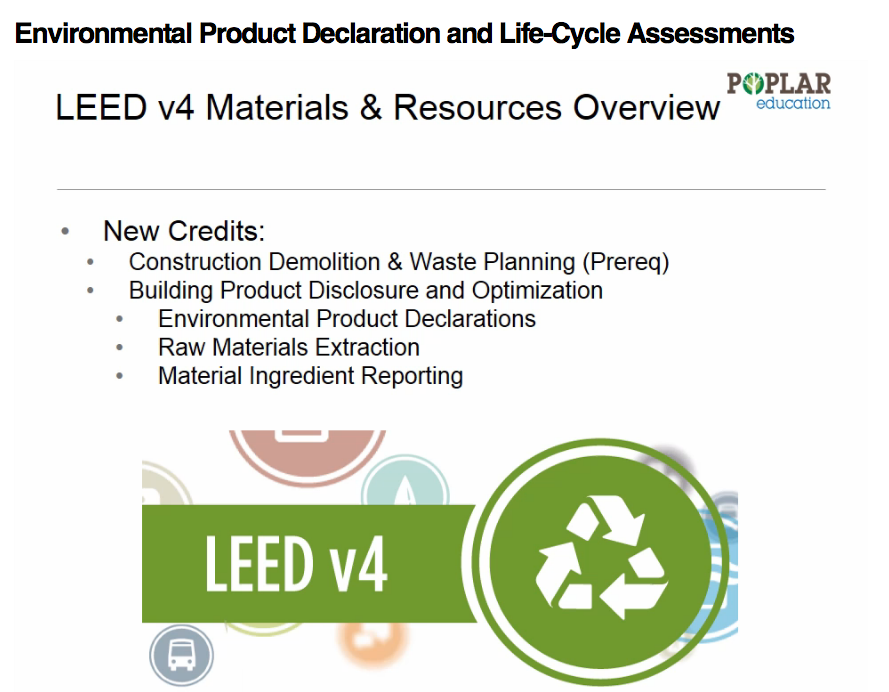
LEED v4 takes green products to the next level.
Learn about how Environmental Product Declarations (EPD) and Life Cycle Analysis (LCA) affects your green building product marketing process in this FREE training course for Poplar members.
Connect.
Find LEED consultants and professionals with green building skills and experience.
Meet Pros.

Learn.
Relevant education and training to consider.
News.


_itok-GdAYtPyq.JPG)

Why join Poplar Network?

- Learn about green building
- Save on LEED exam prep
- FREE continuing education
- Join the conversation
- Connect with peers