
LEED for Retail: USGBCs Secret Consumer Marketing Strategy?


LEED for Retail may be USGBC’s best strategy when it comes to raising consumer awareness of LEED.
The curse of knowledge can be a very dangerous thing.
For marketers, suffering from the “curse” means that because we live and breathe our products, we mistakenly assume others must be aware of them.
The curse of knowledge can lead to further mistakes of assumption, such as using overly complicated marketing language, or worse, messaging that comes off as presumptuous or boastful.
Less experienced marketers may find that their new knowledge of green building and LEED can bring on this “curse” because once they realize how logical green building is, and how much sense it makes, it becomes harder for them to imagine anyone not knowing about it...!
But the fact is that many people don't know anything about green building... and even fewer people know about LEED.
Being aware of this can be helpful to marketers both in terms of having the humility that's necessary to market effectively and in terms of developing the right marketing strategy.
LEED is Virtually Unknown Among Consumers
LEED may be green building’s best kept secret.
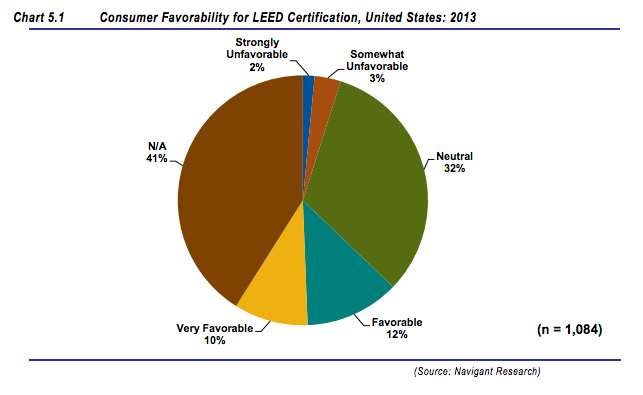
According to a 2013 Navigant Research Consumer Survey on Energy and the Environment, LEED certification came out at the bottom in terms of consumer awareness with 73% of people surveyed either being unaware of LEED or having no opinion about it. 22% of those surveyed had a favorable or very favorable opinion of LEED certification and 5% were either somewhat or very unfavorable.
Solar, wind and hybrid vehicles were numbers 1, 2 and 3, with relatively huge consumer awareness levels of 79%, 72% and 67%, respectively.
The sun, wind and cars are tough to compete with, no question. But if consumers are aware of hybrid vehicles and renewable energies like solar and wind, which are sub-categories of green building... Shouldn’t consumers also be aware of LEED?
Boosting Awareness Through LEED for Retail
Perhaps the key to raising awareness among consumers is connecting with them where they're doing all that "consuming" in the first place.
According to USGBC’s LEED in Motion: Retail the percentage of retail owners involved in green building more than doubled between 2011 and 2013 from 18% to 38%. This number is expected to further improve to 52% by 2016.
By all indicators, LEED for Retail is a success. The gross square footage of LEED for Retail projects, either registered or certified, globally is over half a billion square feet, and the top three LEED certified retail brands are high traffic consumer destinations:
- #1 Starbucks: 500 certified LEED projects in 18 countries
- #2 Kohl’s: 434 stores (38% of its retail locations)
- #3 Verizon Wireless touts 200 certifications at the LEED Silver level or higher.
By USGBC’s own calculations of data from 18 companies with LEED certified projects, approximately 1.2 million people pass through the doors of a LEED certified retail location every day. Of these, 312,000 consumers experience a LEED certified Starbucks, Kum & Go convenience store, or Walgreens.
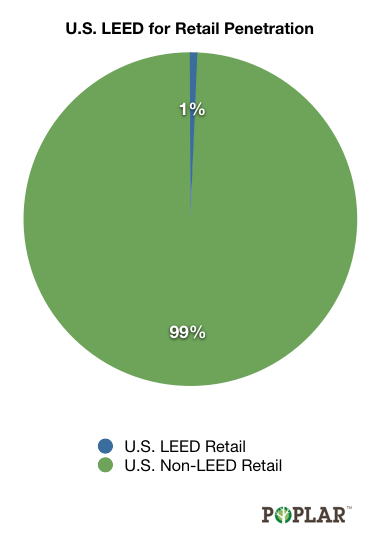
This is a great start, but LEED for Retail certifications are still less than one percent of U.S. retail square footage.
USGBC could boost awareness among consumers significantly if it had a unique rollout program for LEED for Retail with a two pronged marketing strategy: 1) Reduce barriers to entry for new retail brands and 2) leverage the new LEED Dynamic Plaque.
1) Reduce Barriers to Entry
To increase everyday recognition of LEED, LEED for Retail could follow a similar strategy as LEED Earth.
LEED Earth is USGBC's program for expanding internationally with the goal of having at least one LEED project in every country on the planet. LEED Earth offers to waive certification fees for the first LEED project in any country that does not already have a LEED certified project.
A similar concept could work for LEED Retail. For instance, USGBC could create a program where any new retail store brand with more than one location that wanted to certify could have its fees waived for the first store. Chains would benefit by saving a small amount on their first project, and independent small businesses would become new allies.
2) Leverage LEED Dynamic Plaque in Retail Environments
And are consumers really “experiencing” these LEED certified stores as USGBC’s LEED in Motion: Retail report suggests? I doubt it's happening the way that they want it to, or the way someone "experiences" going to Disney or an Apple Store (which have one and zero LEED certified retail locations, respectively).
This could change, though, if USGBC adopted a more aggressive marketing strategy for LEED for Retail, one that incorporated the new LEED Dynamic Plaque.
The LEED Dynamic Plaque is a unique and eye catching digital display that tells the story of green building performance.
According to USGBC, the LEED Dynamic Plaque “makes the invisible actionable and offers a means for interaction with the building on multiple levels: visitors can "see" performance, occupants can provide feedback on their experience, and owners and building managers can view trends to make informed decisions to optimize the building, benefitting people, planet and profit.”
USGBC would promote awareness of the program among its many architectural design team members. In return for designing a unique and prominent place for the LEED Dynamic Plaque, such as near the entrance of the store, USGBC could offer to waive or offer steep discounts on the $6,000 annual subscription fee associated with the plaque.
Retailer interest in LEED certification would likely increase because of the benefits of being considered environmentally and socially responsible.
And corporate social responsibility (CSR) standards are increasingly being rewarded, especially by the Millennial generation, which could further reinforce the economics of green building in retail environments.
Millennials Put Dollars Behind “Green” Companies
Study results published this summer by Oliver Russell show that Gen Y’s interest in spending their dough with socially responsible companies is increasing. In fact, 85% explicitly stated that they had made a purchase in the past year because of a company’s commitment to social responsibility, and 44% said they did so often.
Millennials are perhaps the most educated generation in our country’s history, and they hold significant purchasing power. Millenials spend approximately $600 billion annually, a number that is expected to more than double by 2020 as they mature and enter the workforce.
But even if a retailer's ideal target market isn’t Millennials right now (though it likely will be), the concept of spending for social good is rubbing off on the elder generations as well. In 2013, 89% of all Americans said they would consider switching brands to one associated with a positive social cause if price and quality were equal.
So investing in green building isn’t merely an investment in the world’s sustainability, it’s also a savvy way for retailers to promote their brands to increasingly socially conscious consumers.
LEED for Retail could be USGBC's path to both boosting awareness of LEED and improving the return on investment (ROI) for LEED certified stores.
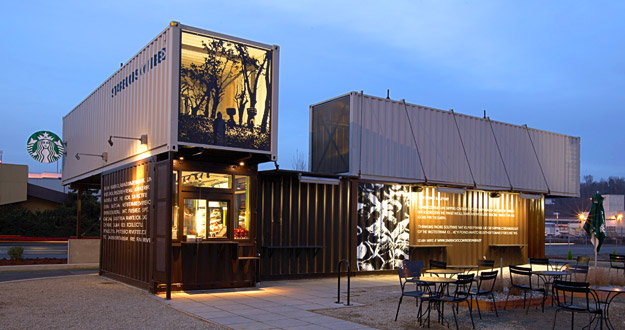
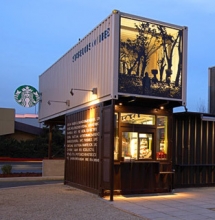
(Starbucks' Reclamation Drive-Thru in Tukwila, Washington shown above is a cool example of one of the chain's LEED certified retail locations that's made entirely from shipping containers.)
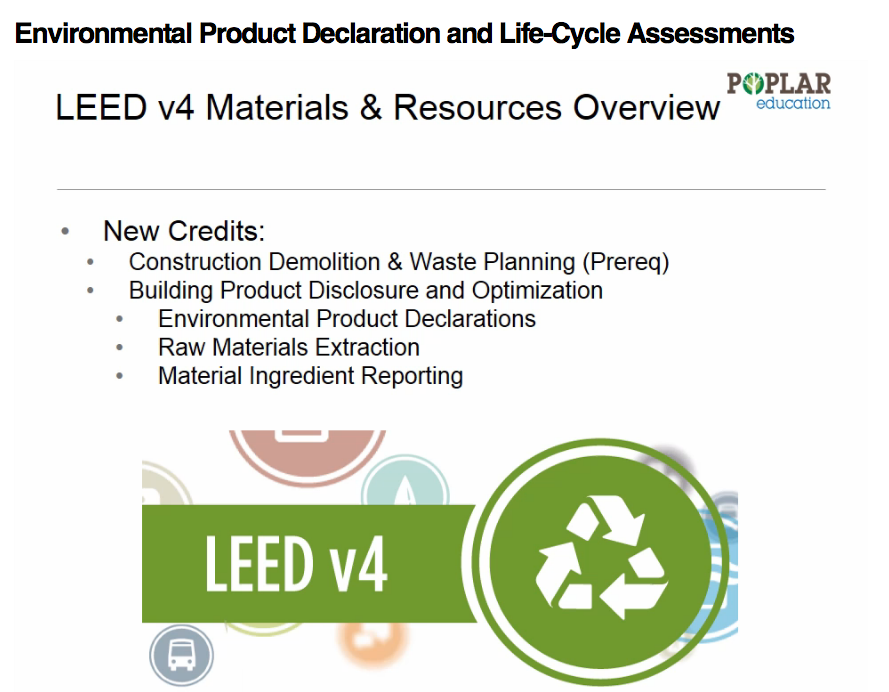
LEED v4 takes green products to the next level.
Learn about how Environmental Product Declarations (EPD) and Life Cycle Analysis (LCA) affects your green building product marketing process in this FREE training course for Poplar members.
Connect.
Find LEED consultants and professionals with green building skills and experience.
Meet Pros.


Learn.
Relevant education and training to consider.
News.


_itok-GdAYtPyq.JPG)

Why join Poplar Network?

- Learn about green building
- Save on LEED exam prep
- FREE continuing education
- Join the conversation
- Connect with peers