
Is Fly Ash a Green Material?


Fly ash, a byproduct of coal combustion, can be recycled. While fly ash's safety is up for debate, it is considered a sustainable material when reused in bricks or other building materials.
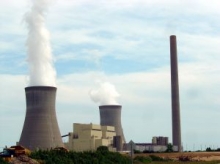
Fly ash is largely made up of silicon dioxide and calcium oxide and is generated from the combustion process - specifically, the combustion of coal. Fly ash rises with the flue gases from a coal power plant and in the past it was released into the atmosphere.
More recently, environmental law regulated the amount of fly ash that is allowed to be released into the atmosphere. Therefore, fly ash is now either disposed of in landfills or recycled somehow. One way to recycle this waste is to use it to make bricks or cement.
Currently, about 43% of fly ash is recycled. The rest is either dispersed into the atmosphere, sent to a landfill, or mixed with water and held in a slurry retention pond.
Of these four choices, I think recycling this material for another use is the best and most sustainable option.
Is Fly Ash Safe?
Dispersing toxins into the atmosphere is obviously a bad idea, which is why it’s now regulated. Landfill space is at a premium right now, so any way to avoid sending more waste there is a good thing. Storing fly ash in retention ponds can be dangerous if the retention pond fails, as in the Kingston spill in Tennessee, or if the toxins find a way into the environment and ground water.
There is currently a debate in the green building community on just how safe fly ash bricks are, since fly ash is composed of chemicals that are considered toxic, including arsenic, lead, mercury, barium, boron, selenium, chromium and others.
However, many of these elements (in these concentrations) are found in regular unpolluted soil, so it is difficult to say exactly how safe or unsafe they are when used in fly ash bricks.
Most modern common bricks use a mixture of clay, sand, water and lime. This mixture is pressed into molds and then heated, or fired in a kiln at very hot (1000+ degree C) temperatures.
Fly ash bricks replace the clay with fly ash, and some manufacturing processes use pressure instead of heat to cure the bricks, reducing the amount of energy required to manufacture.
Fly ash has been used for years around in the world in bricks. In fact, volcano ash (very similar to coal fly ash) had been successfully used in the production of bricks all the way back in the Roman ages.
As long as the fly ash brick is manufactured to and passes the same testing standards as modern clay bricks used in structures (ASTM C62), I don’t see any drawbacks to using fly ash bricks in facility construction.
Fly ash can also be used as a substitute for Portland cement, or as a supplement to it. The materials which make up fly ash are pozzolanic, meaning that they can be used to bind — or cement — materials together. Fly ash can also be used in other areas in which Portland cement would normally be used such as soil stabilization, flowable fill and geopolymers.
Green Benefits of Fly Ash Bricks
There is a specific benefit to using fly ash bricks or cement for green building and LEED projects because they are considered a recycled material. This will help earn points in Materials & Resources (MR) Credit 4, Recycled Materials.
Using fly ash bricks also reduces the amount of energy used to produce regular clay bricks, and the reduction of CO2 emissions due to the energy intensive process to produce those bricks in a 1000 degree C kiln.
Other benefits include the reduction of fly ash waste going to landfills or being stored in a retention pond, which can be hazardous and potentially dangerous.
I believe that the direct and indirect benefits of using fly ash bricks outweigh the potential consequences, and that their use will help a construction project to be more sustainable.
LEED v4 takes green products to the next level.
Learn about how Environmental Product Declarations (EPD) and Life Cycle Analysis (LCA) affects your green building product marketing process in this FREE training course for Poplar members.
Connect.
Find LEED consultants and professionals with green building skills and experience.
Meet Pros.


Learn.
Relevant education and training to consider.
News.


Q&A.


Why join Poplar Network?

- Learn about green building
- Save on LEED exam prep
- FREE continuing education
- Join the conversation
- Connect with peers