
6 Reasons to Choose LEED v4 Rainwater Management


Looking for those water efficiency points in your next LEED design? Here are 6 reasons to consider rainwater management beyond just improved water efficiency!
It's raining cats and dogs right now here in New England, and I'm wishing I had a massive cistern to capture all this valuable water.
Rainwater harvesting is an ideal strategy for minimizing the amount of potable water used in outdoor irrigation for any home or building. And in LEED project designs, beyond the prerequisite for Outdoor Water Use Reduction, projects can earn one to two additional points by using strategies such as water efficient landscaping in the LEED Water Efficiency credit category. More comprehensive efficient building water management strategies earn even more points.
Rainwater Management
In LEED v4, buildings can also earn up to 3 points by achieving the new Rainwater Management credit, a simpler and improved combination of the stormwater quality and stormwater quantity management credits from LEED 2009. Projects can also earn exemplary performance in this credit by managing 100% of rainwater using Low Impact Development (LID) and green infrastructure (GI).
Strategies for LID and GI include minimizing areas disturbed by construction as well as limiting the amount of impervious cover on a site (such as paved areas or concrete). Rainwater harvesting is an approach that treats rainwater as an important resource and captures it by infiltrating, filtering, storing, evaporating or detaining rainwater runoff near its source.
As can be seen in the graphic below from the Wester Region Climate Center, Eastern and Midwestern parts of the U.S. typically receive more than 30 inches of rainfall annually, but further to the southwest, in states such as Arizona, Nevada, Texas, New Mexico and Southern California, the lack of rainfall seems dire.
As such, rainwater management in these states is even more worthwhile.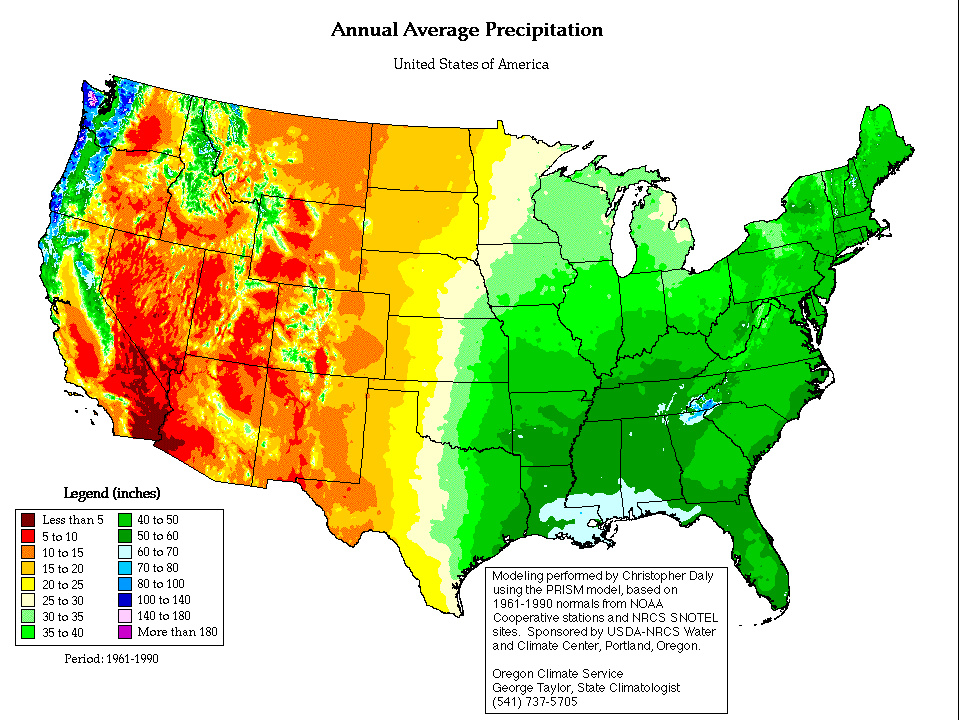
But rainwater management strategies can provide benefits beyond just addressing water shortages... Indeed, they can have far reaching impact and reduce global climate risk.
In its report on Rainwater Harvesting "A Lifeline for Human Well Being" the Stockholm Environment Institute (SEI) and the UN state that "rainwater harvesting can serve as an opportunity to enhance ecosystem productivity, thereby improving livelihoods, human well-being and economies."
In fact, there are a number of well-documented benefits associated with rainwater harvesting that extend beyond just improved water efficiency. Read on!
1. Reduced Energy Usage
A lot of energy goes into capturing, treating and distributing water through a municipal water utility. Wastewater treatment, which is increasingly being used to convert raw sewage into drinking water, requires multiple, highly energy intensive steps.
Rainwater harvesting systems, on the other hand, require very minimal energy consumption by diverting water that would otherwise be treated as waste and harnessing it for future use on site.
2. Reduced Chemical Usage and Impact
Water treatment facilities rely on a variety of chemicals to treat and recycle water, and while those that remain in the water that comes back to your house are generally safe for human consumption, harmful byproducts of the process do exist. For instance, the most common decontaminant, chlorine, creates a harmful toxin (trihalomethanes) when it encounters organic matter. Rainwater harvesting (a) obviates the need for the use of these chemicals in the first place and (b) eliminates the resulting harmful byproducts.
3. Improved Runoff Management
In urban areas where stormwater can create significant erosion and potentially even hygiene problems, capturing a percentage of the rainfall for harvesting reduces the total amount of flow in ditches or on roads. Indeed, during periods of heavy rain (like we're experiencing today) municipal sewer systems are often overrun, causing sewage to be dumped out along with rainwater into nearby oceans, lakes and other water bodies.
4. Decentralized Reliance
Just as solar panels and small wind turbines are increasingly enabling microgrids, encouraging buildings to be more self-reliant, rainwater catchment systems provide the opportunity to reduce reliance on water mains.
5. Reduced Groundwater Reliance
Due to high water demand in urban and suburban areas, many have turned to groundwater extraction as a solution. The problem, however, is that over harvesting this resource leads to negative impacts on the soil and subsequent ecological systems that rely on healthy land.
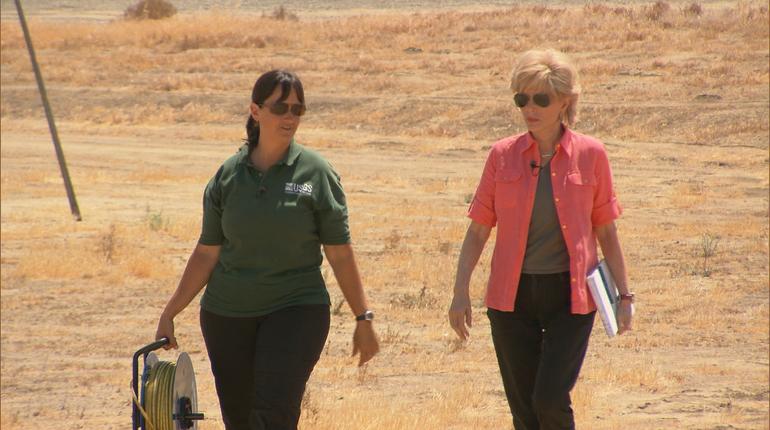
If you didn't catch it, a recent 60 Minutes episode with Leslie Stahl covered the shocking conditions and use of ground water in California. If you don't catch the full piece, here's the summary: We're using groundwater faster than it can be replenished. Because there are no laws to prevent this from happening, every farmer in California is freaking out, drilling deep wells so they can grab as much ground water as fast as possible before the music stops. This is making the situation way worse and accelerating the point of 100% depletion (i.e. no more water).
6. Low or No Cost
Rain is free and, the last time we checked, no one’s going to be charging for it anytime soon.
While there may be an initial cost in installing a harvesting system, current estimated payback periods range from about 8-12 years for the average residence. What’s more, cities and states are considering offering rebate opportunities on water efficiency systems. Local water utilities may also sell smaller cisterns at competitive prices or you can undertake a project to make a DIY rainbarrel for almost nothing.
So, while it's dependent on admittedly unreliable rainfall, for what is an increasingly important, strategic and relatively low dollar value financial commitment, rainwater harvesting can improve any building, or LEED project’s, overall water efficiency.
Connect.
Find LEED consultants and professionals with green building skills and experience.
Meet Pros.


Learn.
Relevant education and training to consider.
News.


Why join Poplar Network?

- Learn about green building
- Save on LEED exam prep
- FREE continuing education
- Join the conversation
- Connect with peers