
Solar Thermal and Radiant Heat: A Match Made in Heaven?


If you’re installing a solar thermal system, it may make sense to go the extra mile and incorporate hydronic radiant floors as well! We’ve got the full scoop here.
Extending well beyond LEED buildings, radiant heat is all the rage these days, offering a comfortably warm surface for our toesies without having to rely on carpeting or rugs. Particularly desirable is that many of the conventional mediums for radiant heating compliment modern design aesthetic well, too. But there has been some debate in years past about the effectiveness of radiant heating, and whether or not its an ideal sustainability aspect of new construction. In my opinion, when done correctly, it certainly can be.
First, as the U.S. Department of Energy suggests, radiant heat is “more efficient than baseboard heating and usually more efficient than forced-air heating because it eliminates duct losses.” What’s more, hydronic systems - those that couple with solar thermal systems - use minimal electricity to operate. Because the heat is being uniformly transferred through the floor, it’s more effective at keeping the lower half of the room, the portion occupied by people, warmer.
What’s more, the materials that are typically used in radiant floors - including concrete and tile - are high mass and therefore store heat quite effectively. This property keeps environmental heating even, and inhabitants are naturally more comfortable in such spaces than those that utilize point heating (such as radiators) and often experience swings in temperature. That said, for a further level of individualized comfort, the LEED BD & C Reference Guide suggests under IEQc6.2 implementing individual controls in core and shell designs. These controls allow those in workstations greater power of the radiant heat in their unique zone.
So the case for radiant is made. Now what?
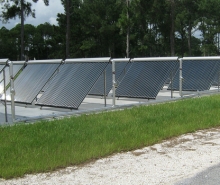
Radiant floor heating marries wonderfully with solar thermal because its non-taxing to the system. Floor heat need only be roughly 120 degrees Fahrenheit (or less), which is a level that solar thermal systems can supply without overworking or requiring a supplemental source that would mitigate the energy efficiency. In addition, the high density radiant flooring materials can act as storage for nighttime heating, mitigating costs and other potential requirements associated with utilizing solar thermal for heating needs. For an in depth account of one of the earliest solar thermal radiant heat systems in residential new construction, consider reading this article.
The only caveat here is that hydronic radiant heating is typically most cost effective in additions or new construction. Completely tearing out an entire existing heating system and flooring in order to replace it with a hydronic system is overkill when compared with the electric sub-flooring alternatives. However, for new construction, hydronic solar thermal radiant heating may be one of the best options.
Connect.
Find LEED consultants and professionals with green building skills and experience.
Meet Pros.


Learn.
Relevant education and training to consider.


Q&A.


Why join Poplar Network?

- Learn about green building
- Save on LEED exam prep
- FREE continuing education
- Join the conversation
- Connect with peers