
Green Buildings: Old Wine in a New Bottle


Green building is an ancient concept that has merely been reimagined for the 21st century.
Ask someone a question on green building. Chances are that you will see a blinking face. For many people, the concept of green building is new.
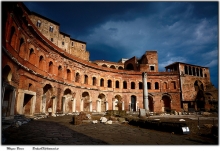
Raised in India, a country with some of the world’s ancient buildings, I often wonder what is new about ‘Green Buildings.’ If you take a look at some of the old residential and public buildings in India that were built centuries ago, you will find that they incorporate many ‘green’ strategies such as natural ventilation, sky lighting, usage of natural and/or local materials, energy efficient transportation and so on. You can see such buildings in the form of old homes in villages, places of worship such as temples, architectural wonders like the Taj Mahal in Agra, Gol Gumbaj in Bijapur and many others. Most of these were built without using any of the energy-intensive products like cement, steel or environmentally harmful lead-based paints. Not only in India, but in many others countries too, such ancient ‘green’ buildings exist. Centuries back, builders often transported materials using energy efficient (read: no-carbon emissions) animal-drawn carts. They had no energy-guzzling HVAC systems but made the best use of natural ventilation and skylight. The energy use for the building construction was minimal. These are examples of structures that caused minimal damage to the environment. Such buildings seem to meet most norms of modern ‘Green Buildings.’
So, what makes the modern green buildings any different from these ancient structures?
It is the creative application of age-old concepts in present day situation of high-density population, and economic challenges that makes the modern green buildings different. Green buildings represent a return to ancient architectural principles using modern technologies. It means using old principles to explore a new world of energy efficiency and environmental benefits in modern style. I think it is analogous to old wine in a new bottle.
With mounting concerns over energy use and environmental damages, conservation is more important than ever before. Worldwide, energy used in different ways but buildings constitute one of the largest consumers of energy. To help conserve energy and improve all round environment, "Green Buildings" have risen in many parts of the world.
What makes a green building?
A green building is a structure that is designed, built, and operated in an ecological and resource-efficient manner to promote healthy living for the occupants and improve the overall environment. Green buildings are designed to help in saving energy, water, use all resources more efficiently; and thus reduce the overall impact to the environment.
The design and construction of such buildings extend beyond energy and water conservation and must include sustainable building practices. They should incorporate environmentally sensitive site planning, resource efficient building materials and superior indoor environmental quality.
Benefits of Green Buildings
There are many benefits in promoting the construction of green buildings. Key benefits include:
- Lower electric and water utility costs
- Environmentally effective use of building materials
- Enhanced health and productivity
- Long-term economic returns
- Reduced environmental impact
Currently, buildings account for over one-thirds of all greenhouse gas emissions. Despite higher up-front costs of a green building compared to a traditionally constructed building, green buildings are becoming more popular. In general, the green building recovers the higher cost during its lifecycle through its energy efficiency, daylight usage and other sustainable features.
A variety of factors, from increasing energy costs to climate change has created an opportunity to think 'green.' Green building programs are becoming the standard in many communities across America. Green buildings have revolutionized the design and construction industry creating more economic opportunities and more jobs.
LEED Program
The U.S. Green Building Council (USGBC) took a great initiative and spearheaded the movement towards green buildings globally.
The USGBC has developed a rating system called LEED - an acronym for "Leadership in Energy and Environmental Design." USGBC developed LEED as a practical rating tool for the design and construction of green buildings. It is a voluntary, consensus-based national rating system. The system reviews different design and construction aspects of a building including water savings, energy efficiency, selection of materials and indoor air quality.
Established in 1998, LEED is now recognized as an internationally accepted benchmark for the design, construction and operation of high-performance green buildings. It has since grown into nine separate rating systems for various types of construction.
The LEED rating system uses codes that are already in existence as a baseline for building guides. Most commonly, it uses existing ASHRAE (American Society of Heating, Refrigerating and Air-Conditioning Engineers) codes.
Does LEED work? If so, in what ways does it work?
LEED works in many ways. To cite some examples, it works in terms of improving human health by lowering rates of lung-related diseases. It works in achieving better energy performance and saving millions of gallons of water, in lowering electric bills and recycling more materials. LEED works in lowering carbon emissions and protecting the environment. It is working to save resources and money for communities.
Outlook for Green Buildings
With ever-increasing energy costs, and campaigns against global warming, there is increased attention towards green buildings. The efficient use of energy and water in buildings is more in favor of working with nature rather than against it.
It is hardly surprising that green building has emerged as an effective strategy to improve the health of a building’s occupants, cut energy usage and costs, combat global warming, enhance public image for companies, and save money for building owners.
As the economic benefits of green buildings become apparent, the demand for green products and processes and related consulting services is growing rapidly opening up great business opportunities. It requires a wide variety of skills this demand. There will be growing need for experts in areas like Heating, Ventilation and Air-conditioning (HVAC), lighting, green building project management and monitoring.
As the green building designs keep improving, there are bound to be more innovations such as rainwater harvesting, use of alternative sources of energy, making greater usage of natural resources.
With more people migrating to urban areas in search of jobs, cities are growing much faster than ever before. This transformation will continue in the years to come imposing greater demands on energy and environmental needs. In such circumstances, the growth of green buildings makes a lot of sense.
No doubt, old wine tastes better in an attractive new bottle!
Connect.
Find LEED consultants and professionals with green building skills and experience.
Meet Pros.

_0_itok-dMpZmZzc.JPG)


Learn.
Relevant education and training to consider.
News.


Q&A.


LEED AP Exam Prep


LEED Professional Project Experience

Why join Poplar Network?

- Learn about green building
- Save on LEED exam prep
- Gain continuing education
- Join the conversation
- Connect with peers