
Could Urban Green Spaces Keep People Smiling?


When it comes to relevant, cutting-edge science for LEED professionals, you might not think about psychology. But, in fact, the link between green spaces and positive well-being is ever deepening.
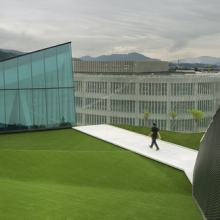
If the potential LEED credits associated with Innovation in Design and IEQ-related daylighting and views aren’t reason enough to consider incorporating green space into your design, a study recently published in Psychological Science has yet another altruistic cause.
While some people who seek a more sustainable planet see any development as potentially problematic, more tempered voices understand that the very challenge we’re all trying to overcome requires focus on vertical development and harmonizing urban development with green spaces. The latter was the case for a team of British researchers from the University of Exeter who’s recent study found that green spaces are integral to the positive mentality of city residents.
Panel data from more than 10,000 individuals over a ten year period was collected and analyzed to uncover a clear link between urban green space and both decreased mental distress and improved well-being. Even more interesting, though, is that such benefits last for a long period of time. The research team surmised their findings by saying that the positive impacts of green space far outlast the happy blips we feel from financial gains from the rare, such as winning the lottery, to promotions at work. Simply put, our connection with nature can stimulate a deep-seated satisfaction from material goods cannot offer.
Dr. Matthew White, a co-author of the study, delineated the application of the findings, suggesting to the BBC, “It may be the [background factor] that helps tip the balance towards making more sensible decisions and having more adult conversations.”
In other words, when it comes to city planning, amidst the skyscrapers, highways and other critical infrastructure, green spaces should be intentionally incorporated where citizens can go to relax. The subsequent impact isn’t just a happier city, but one that is also potentially more productive and clear-headed.
For many creatives and those in the environmental field (indeed, anyone who has lived in Manhattan will attest to the importance of Central Park) this comes as no great surprise. In fact, entire artistic movements have been birthed by such an understanding. But true scientific evidence has not always been so readily available. Rather, this study is part of a recent surge in research linking urban green spaces and strong mental health.
Interested in learning more? Consider checking out the list of top 2014 LEED friendly conferences to attend where you'll find details on the Grey to Green Conference that is making such research the pillar of this years presentations and discussions.
Connect.
Find LEED consultants and professionals with green building skills and experience.
Meet Pros.


Learn.
Relevant education and training to consider.
News.


LEED CMP

Why join Poplar Network?

- Learn about green building
- Save on LEED exam prep
- FREE continuing education
- Join the conversation
- Connect with peers