
Could Micro-Grids Be The Answer to Renewable Energy Challenges?


There is a quiet, growing trend of micro-grids that can provide redundancy for the grid we rely on. Is this solution a win-win for everyone?
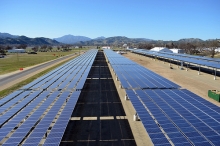
When it comes to making grid energy dependable, demand response efforts don’t always measure up. Time-of-peak use programs and/or peak demand pricing programs that seek to curtail demand can be effective if they are widely adopted and applied. The power stays on and the local utilities don't have to make large investments in new power plants... but is tempering consumer wants and needs (especially during times of extreme temperature) really effective? As the Northeast found during the Brownout of 2012, no, it’s really not. Instead, what if we begin to seriously consider micro-grid alternatives to the central grids currently in widespread use?
The microgrid is exactly what it sounds like - a smaller version of the large scale grids that run between cities and states. They, too, integrate distributed energy resources - generators, microturbines, fuel cells, solar power, storage devices, end-use loads - into a miniaturized version of the real deal. What’s particularly impressive of microgrids is that they can function in unison with the macro-grid, but come alive in times of an energy crisis.
This is vital in that the arguably outdated, centralized system of macro-grids leaves large swaths of consumers vulnerable to power outages - in some situations when the cause may actually be states away. What’s more, the large scale operations currently used leave energy consumers dependent on a small number of energy producers who, for lack of a better description, control the entire game.
The ability of micro-grids to isolate themselves has two critical benefits: (1) it reduces strain on the already strained macrogrid by eliminating some demand and (2) can actually help power sources return to production status more quickly by supplying them with the necessary “reboot” energy. Whether brownouts or blackouts, mitigating downtime can literally mean the difference between life and death in many situations.
But it’s not just about the improved reliability offered by micro-grid alternatives, as they also facilitate reduced energy waste, carbon emissions, and energy costs. Their community-owned nature has economic implications in that it’s a completely localized unit that can create local jobs, and can input government-backed finances into the community as well.
Currently, micro-grids are routinely found in prisons, hospitals and military bases, where the availability of energy is essential for operations. However, their application continues to grow as individual communities, corporations and even large-scale residences being to investigate the freedom associated with their own energy generation and storage. Is this something your community should start considering, too?
Connect.
Find LEED consultants and professionals with green building skills and experience.
Meet Pros.

_itok-2U2K84oZ.gif)


Learn.
Relevant education and training to consider.
News.


Why join Poplar Network?

- Learn about green building
- Save on LEED exam prep
- FREE continuing education
- Join the conversation
- Connect with peers