
Unfixable: An Environmentalist's Take on Climate Change


I'm an environmentalist and have commited my career to sustainability, even though I don't believe climate change is a solvable problem. Here's why.
I’m an environmentalist. I studied environmental science at Cornell, started climate change and energy conservation clubs on campus, interned for the conservation department at a town government, and now work for a green building startup company. I’ve committed my career and my life to sustainability and fighting climate change.
Despite this, I don’t believe climate change can be fixed. I don’t think the human population will wake up in time (or at all) and solve this looming problem before its too late.
Are We Better than the Easter Islanders?
Every environmentalist’s favorite sustainability tale is the one of Easter Island. In the fifth century, about 20 or 30 Polynesians migrated to Easter Island, a remote island 2500 miles off the coast of South America. They populated the island with chicken and rats, and began farming. In their spare time, they built huge stone statues, which came to have great cultural significance. The stone weighed hundreds of tons , and they built systems for moving the stone with timber. The timber was also used for homes, boats, heat and farming. As the population grew to 7000, trees became more and more scarce. By 1600, the deforestation became so bad that the natives began abandoning their homes to live in caves. They could not repopulate the trees because the rats had eaten the seeds, and resource warfare broke out. People were forced to turn to cannibalism because they ran out of food.
Even though the tree population had to be noticeably decreasing, the people never stopped building the stone structures, and they didn’t find a way to replenish the tree populations. They just let the timber run out.
So, lesson learned. Of course, we always learn from history and don’t repeat our mistakes... right? Not quite. There are distinct parallels between the tragedy in Easter Island and the current day deforestation in the Amazon rainforest, 60% of which is located in Brazil. Thanks to farming, housing, cattle pasture and the need for hardwood, the Amazon has been cut away at rapid rates since the 1970s, when access to the rainforest was no longer heavily restricted. Between 1991 and 2000, the rainforest had shrunk by over 160,000 square kilometers, and the total amount destroyed was the size of Spain. At 2007 deforestation rates, the rainforest was expected to shrink by 40% over the next 20 years. Thanks to hard won restrictions, the amount of deforestation finally began to slow in 2011.
This May, though, the Brazilian government estimates that 465 square kilometers of forest were cut down - nearly five times the amount of deforestation May of last year. It’s expected that this is because Brazil‘s Forest Code, which limits the amount of forest that can be cleared on private land, was recently relaxed. Another cause is that Brazil’s currency has weakened, making it more advantageous for farmers to export their crops. Experts fear a reversal.
Glaciers and Hurricanes
In the last year, I’ve seen two huge forces of nature that have brought me face to face with the effects of climate change: Hurricane Sandy and a recent trip to Alaska.
In October, my hometown, Long Beach, New York, was rocked by Hurricane Sandy. When you stand on the porch of my parents house, you can look one way and see the ocean, and the other and see the bay. That night, Sandy forced the two to meet in the middle of the street. Waves were crashing on my parents house, and the ocean pushed a car through the backyard wall and onto the lawn. Our basement flooded with ocean water and backed up with sewage. The town was shut down and under patrol by the National Guard, and my parents ate military MREs while they carried sewage out of the basement in buckets. The running water had been compromised, so they washed their hands afterwards with bottled water.
Our family felt blessed to have three stories, because only one was unusable. Our friend lived in a basement apartment and lost absolutely everything. I also heard of friends who had to dive out of second story windows, and who had to go hunting for their boats because they got sucked out to sea during the storm.
All things considered, our town was one of the lucky ones. Many in New Jersey suffered far, far worse.
Some people on my parents’ block have lived there for over 50 years, and have never seen a hurricane like this. Sure, hurricanes have been around for as long as humans can remember - but natural disasters like Hurricane Sandy are much, much worse because of climate change.
Mayor Bloomberg and Governor Cuomo of New York, along with numerous scientists, came out and said so right after it happened.
After the hurricane, though, the only major legislation passed was for aid to the victims of Sandy. There was no significant attempt to stop it from happening again. Even if some kind of legislation does get drawn, we are facing the least productive Congress in modern history. If Congress can’t pass mandatory background checks for gun purchases with support from 90% of the American public, I highly doubt they’ll pass a radical environmental bill with significant measures to combat climate change.
A couple of weeks ago, I went to visit my friend from college in Juneau, Alaska. Juneau is a popular tourist destination, and one of the most popular attractions is the glacier tour. There are about 150 glaciers in Juneau, though Mendenhall and Taku are the two most popular. Alaska as a whole has 616 named glaciers, but there are an estimated 10,000 in total.
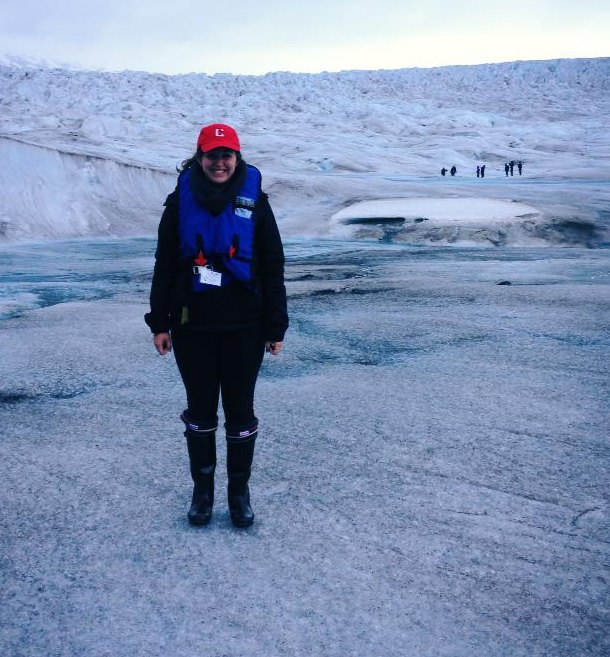 I took a helicopter ride to Taku Glacier, the tour guide told us that its the only growing glacier in Juneau - all the others are receding.
A few days later, I hiked with a few people from Juneau to the ice caves at Mendenhall Glacier, which unlike the Taku, is shrinking. When we got there, my friends pointed to where Mendenhall used to extend when they were younger, just 15 to 20 years ago. Now there is a huge basin, filled with glacial melt, where the glacier itself used to stand. In fact, it’s known as the only glacier you can drive to by car, but now it’s extremely difficult to get there because it’s receded so much.
On the hike, I asked : “everyone here must believe in climate change, right? I mean, with all of these receding glaciers right here”. Surprisingly, my new Juneau friends said no - many Alaskans are conservative and a lot of them don’t believe in climate change.
There are people who still don’t believe climate change is happening, even though it’s happening right before their eyes. Or, people believe it’s happening, but don’t believe that we humans are causing it. A 2009 Pew Research Center poll found that 49% of the public believe that global warming is due to human activity, 36% believe it’s happening due to natural changes, and 11% believe there is no evidence of warming.
These numbers shift drastically across party lines. An October 2013 Pew Research Center poll found that 85% of Democrats believe their is solid evidence of warming, but only 48% of Republicans believe there is evidence.
Lastly, most of the people who do believe it’s happening don’t think it’s a major priority. In a January 2013 poll from Washington Post-ABC News, climate change ranked last on a list of items that Obama and Congress should give the highest priority. Only 18% said climate change should be given highest priority. When broken down by party, 26% of Democrats and only 7% of Republicans said it should be given highest priority. Issues like the economy, spending, taxes, gun control, and immigration reform all ranked higher.
So, even if we figured out a brilliant way to stop climate change from happening - it’s still a major hurdle to get the public behind it.
So, Why Fight It?
It’s not that I want the human population to ignore climate change and face ultimate doom. I’m not anxiously waiting an “I told you so” moment. I’d like to think that we can wake up and radically change the world, and come together to replenish our resources. I believe that if enough people really cared and committed their lives to saving our precious resources, we could stop climate change, or at least slow it down significantly. However, between history and the current apathy that exists, I’ve lost faith that this will happen. I’m not sitting on the edge of my seat, waiting for an epiphany and a sustainability revolution. Despite this, I still passionately want to spend my life working to fight climate change. Here are some reasons why.
- Loving nature is - well, natural. I don’t think anyone has looked at a beautiful sunset and thought, “Gross.” It’s natural to love nature as a human being. People go on vacation to see beautiful beaches, forests and countrysides for a reason. My fondest memories as a kid were going camping and sitting next to the lake, going to the beach near my childhood home, or going on a whale watching tour on vacation. Even if it’s not possible, it’s devastating to think that one day, those natural resources could be gone. Id’ regret it if I didn’t at least try to stop it.
- Somebody’s got to do it. The public is a sum of its parts. Just because everyone isn’t on board to fight climate change doesn’t mean that the minority that does should just give up. Every major change in history has started with a small group of people with a new idea. Even if it’s too little, too late, I’d rather be in that small group.
- Climate change is an “umbrella” problem. Climate change is not an issue that is isolated to the environment. Environmental degradation can cause illness from environmental contamination, hunger from desertification, and warfare due to resource scarcity. By fighting to slow climate change, you’re effectively tackling many of the world’s problems, and getting a lot of “bang for your buck” so to speak.
- Sustainability makes sense. In most cases, sustainability - and especially green building - makes sense. Saving energy and water saves money. Reducing waste streams cuts waste disposal costs and purchasing costs. Building with natural products improves indoor environmental quality, which makes occupant sick less frequently. Renewable energy makes countries with limited fuel resources less dependent on foreign powers. Sustainability isn’t just about preventing an environmental apocalypse - there are a lot of immediate or short term gains to be had by investing in sustainable materials or practices.
What do you think? Comment below!

Connect.
Find LEED consultants and professionals with green building skills and experience.
Meet Pros.


Learn.
Relevant education and training to consider.
News.


Why join Poplar Network?

- Learn about green building
- Save on LEED exam prep
- FREE continuing education
- Join the conversation
- Connect with peers