
Understanding Commercial Energy Audits: 4 Options to Choose From


Want to reduce your building’s operating costs while simultaneously improving it’s performance? This article has all the relevant information about Commercial Energy Audits, including their use in LEED 2009 and v4.
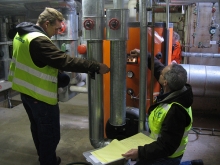
Are you or a client considering a commercial energy audit? It’s likely a great idea, as it will not only help you discover and diagnose areas for improvement that could lead to significant cost savings, but also there may be utility incentives that can help pay for the cost of an audit. In LEED v4, as well as LEED 2009, energy audits are mentioned as part of an overall strategy for achieving minimum energy performance, which is a critical prerequisite on your path toward earning LEED credits. So, if you're curious about what's involved in getting a commercial energy audit completed, read on. I'll provide an overview of the three most common types of energy audits as approved by the American Society of Heating, Refrigerating and Air-Conditioning Engineers (ASHRAE).
Why a Commercial Energy Audit?
An energy audit is often the first step in a commercial building's attempt to reduce energy-related operating costs.
The process identifies how much energy a building uses and the purposes for which it is used, and identifies efficiency and cost-reduction opportunities. ASHRAE uses 3 levels of energy audits: walk-through analysis, energy survey and analysis, and detailed analysis of capital-intensive modifications. Building energy audits assess energy usage, as well as electricity (and sometimes water consumption).
However, they don’t simply identify the main sources of energy use, a proper energy audit seeks to prioritize the energy uses according to the most cost effective opportunities for energy savings. Naturally, for commercial energy audits, it’s not only the cost that is to be considered, but also the owner’s timetable for holding the property.
What happens in a Commercial Energy Audit?
Energy audits vary in terms of scope and depth depending on the building and what the owners/operators want to achieve. The first step is for an energy auditor to visit your commercial building and interview on-site managers and engineers. The auditor will thoroughly inspect the lighting, air conditioning, HVAC equipment, water consuming products, air compressors, controls and anything else that consumes energy. Afterward, the auditor provides the owner with an in-depth evaluation of energy conservation measures - or ECMs - that could be implemented in your building to reduce both energy usage and costs.
Among the details of this information will be simple payback calculations associated with the energy savings techniques. Owners may find that there are certain ECMs that may pay for themselves almost immediately. However, others may require embracing a long term view, assuming they will take many years to reach payback.
Are All Commercial Energy Audits the Same?
No. In fact, ASHRAE has developed standard energy audit levels 1, 2 and 3. However, a less intense option is available to small businesses and those facing budget constraints. First, we'll outline the ASHRAE options:
ASHRAE Level 1 - Walk Through Analysis/Preliminary Audit
Perfect for clients seeking to green their buildings or seek LEED O+M status, ASHRAE Level 1 audits focus on low-cost/no-cost ECMs, and provide a list of higher cost energy conservation measures. In addition to personnel interviews, reviewing utility bills and other standard practices, the ASHRAE Level 1 audit also reports energy and energy costs savings per each energy conservation opportunity. Additionally, energy usage is broken down into different end uses through an energy balance.
ASHRAE Level 2 - Energy Survey and Analysis
The ASHRAE Level 2 audit is a more intense process that yields deeper insights into building and energy conservation opportunities, making it the go to evaluation for clients seeking LEED certification under Existing Buildings Operations and Maintenance. In fact, the ASHRAE Level 2 audit will garner 2 points (LEED EBc2.1, Option B) and is sometimes the less expensive option than Retro-Commissioning (LEED-EBc2.1, Option A).
The ASHRAE Level 2 audit takes the Level 1 audit findings into consideration, identifies all relevant ECMs for a building, and provides a financial analysis on implementations and operating costs, as well as potential savings. The result is a comprehensive energy audit report highlighting each measure and offering a series of next steps to implement each ECM. ECMs should also be prioritized showing low or no cost measures, compared to more capital intensive ones. The more capital intensive an ECM, the more likely the project will warrant a Level 3 audit.
ASHRAE Level 3 - Detailed Analysis of Capital Intensive Modifications
For each ECM considered, you’ll want to know explicitly the amount to be saved, the associated costs of implementation, and how long it will take for the activity to pay for itself. The high level of financial insight offered through the the ASHREA Level 3 audit makes it the ideal solution for investor situations. The savings reports associated with this more strenuous alternative shed credible light on expected ROI and present projected savings in intensive detail, instilling greater investor confidence.
However, for larger buildings or campuses, the analysis may require the use of energy modeling software or a whole building simulation. A higher level of accuracy can be achieved by collecting whole building data over an extended period of time. If the property has a building management system, or BMS, the system will be used in capturing this data.
When You Don't Need an ASHRAE Audit
As I mentioned above, not everyone is in a place where they can invest in a full blown audit. For buildings in those situations, overview audits provide the least expensive means of determining where a building may be improved. This involves a walk through of the facility to identify energy conservation opportunities, personnel interviews, and a general review of the building’s utility bills. In short, this solution gives very high level suggestions for increased energy savings without the financial calculations offered in ASHRAE Level 1 and Level 2.
Whatever you’re needs, there’s really little reason to avoid an energy audit. The resulting information is only going to help make your building more green, both from an environmental perspective and a money-saving one!
Connect.
Find LEED consultants and professionals with green building skills and experience.
Meet Pros.


Learn.
Relevant education and training to consider.
News.


Q&A.


Why join Poplar Network?

- Learn about green building
- Save on LEED exam prep
- FREE continuing education
- Join the conversation
- Connect with peers