
Start with Why on Green Product Certification


$15-20 billion per year is a lot of green building marketing. Since "green" doesn't mean just one thing, manufacturers of sustainable building products are faced with a lot of confusion.
Green building will be a $150 billion market this year in the U.S. alone and is forecasted to grow at 20% annually.
According to Architecture 2030, by 2035 approximately 75% of the current 375 billion square feet of U.S. building stock will be renovated, and >50% of this is projected to be “green”.
Green building is also a highly competitive market. We estimate that the marketing dollars spent within the green building industry, from the promotion of design and construction services to building products to education, to be $15-20 billion per year.
That’s a lot of green marketing... And, since “green” doesn’t mean just one thing, there’s a lot of confusion.
Indeed, it is almost impossible for consumers to define what terms like “good for the environment”, “eco-friendly” or “green”, mean because the terms are almost meaningless by themselves. In green manufacturing, a product may have a single sustainable attribute, but does that make the product green?
For instance, two pieces of wooden furniture can be physically indistinguishable from one another but one may be a Chinese import comprised of a carcinogenic type of recycled particle board and the other may be designed and built domestically from solid local wood.
How can a specifier, for example, decide whether a cabinet made of rapidly renewable bamboo that is sourced from all over the world is more or less sustainable than a solid wood cabinet made from local timber?
It’s these questions and hidden costs in building products that make third party validation and certification so important... and marketers are relying on established labels to help them communicate in the marketplace more and more.
The why of green building product certification is to reduce confusion, while creating goodwill.
Unfortunately, the process that exists behind the pristinely packaged, eco-labeled and marketed products we buy is a little ugly.
Validation, Certification and Standards Bodies
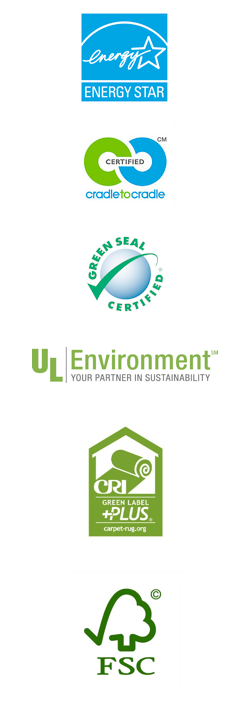 In the world of eco-labels, product claim validation, certification and standards are related, but not the same.
Validation confirms a product’s claim. Certification is a more rigorous form of validation. Certifications rely on standards.
A standard is a set of guidelines against which a certification is measured. Standards bodies set standards for what can become industry norms. The most well known and accepted standards bodies are the American National Standards Institute (ANSI) and the International Standards Organization (aka ISO), both of which define different types of labels that can be used in product claims.
Green product certifying organizations, such as United Laboratories Environment (aka “UL”), use both ANSI and ISO standards and rely on them to be rooted in an open, impartial, non-governmental and consensus based process.
Some certification programs, such as UL Environment, offer validation and certification services for environmental product claims. Other organizations, such as ECOLOGO and Green Seal, only offer certification. ECOLOGO is operated by UL.
Approved Types of Eco-Labels
When evaluating environmental labels, it can be helpful (and time saving) to look for labels approved or audited according to an accepted standards body, such as ISO.
Three types of ISO labels are common in environmental product claims and each is different. Whereas one stands for rigorous third party testing of multiple claims, another can be self-declared and/or focus on a single feature such as energy consumption, emissions or recycled content.
- Type I Labels: A Type I label indicates that a product is is approved to meet a set of requirements with multiple attributes. EcoLogo is an example of a multi-attribute certification program.
- Type II Labels: A Type II label is a verification of a single claim or attribute, such as energy consumption, sustainable harvesting, or emissions. The Forest Stewardship Council (aka “FSC”) is an example of a single attribute program. These can be self-declared.
- Type III Labels: A Type III label is the equivalent of an environmental product declaration (EPD), described below, and is the most stringent type of certification. A Type III label provides consumers with detailed comparative information and examination of a product’s environmental impact, including a Life Cycle Analysis (LCA), described below.
Type III labels are designed in such a way that the product can be easily compared to others like it from within a common framework.
EPDs, LCAs and LEED v4
While LEED 2009 will remain relevant and active for years, LEED v4 is more stringent in awarding points for building materials. LEED v4 strives for greater transparency for not only the designers of green buildings, but also a building's occupants.
LEED v4 relies on product category rules, Life Cycle Analyses or Assessments (LCAs) and environmental product declarations (aka EPDs) in the LEED building certification process. Indeed, in the new Materials and Resources and Environmental Quality categories, certain credits aim to answer specific product related questions:
- LEED MRc3: Where did it come from?
- LEED MRc2: How was it made?
- LEED MRc4: What’s inside?
- LEED EQc2: What is emitted?
The image below from the LEED v4 BD+C Reference Guide shows the steps in the EPD process.
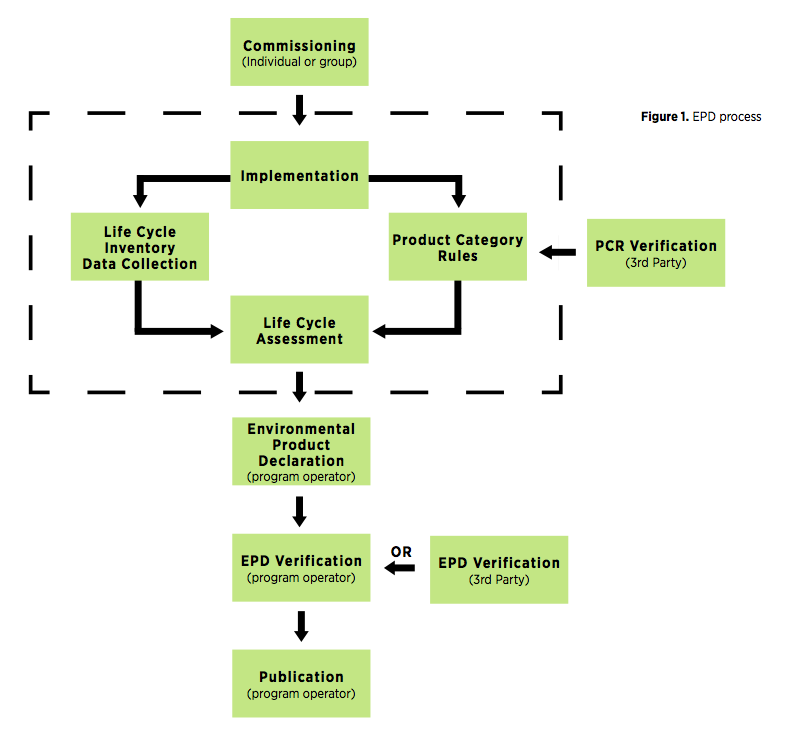
What comes out of this process is an EPD, or a third party examination of a product’s environmental impact.
A LCA is an assessment of all the environmental impacts associated with every stage of a product’s from cradle to grave (i.e. sent to a landfill) or cradle to rebirth (where the product is broken down and reused or recycled to create new products).
EPD and LCA are two important acronyms because they are part of the product certification, and therefore validation, process. To complete a EPD, you must complete an LCA... LCAs are part of the EPD process.
While it might seem that the alphabet of EPDs and LCAs makes certification more complex, over time it should have the opposite effect, standardizing green building product identification and validation and making environmental claims easier to process.
Product Category Rules
LEED v4 organizes LCA information and requirements according to specific product types using “product category rules”.
Product category rules are a step in the environmental product declaration (EPD) process in LEED v4.
Product category rules aim to further minimize confusion by using a common process by which products can be evaluated across all the stakeholders involved in a product’s development (such as suppliers, manufacturers, trade associations, purchasers, users, LCA practitioners, LEED consultants and specifiers).
Wait, Why are We Doing All This Again?
Manufacturers might find it easy to refer to an acronym which sums up and reminds them why they’re doing this work in the first place: “PLEase choose my product!”
- Product category rules
- Life-cycle analysis
- Environmental product declaration
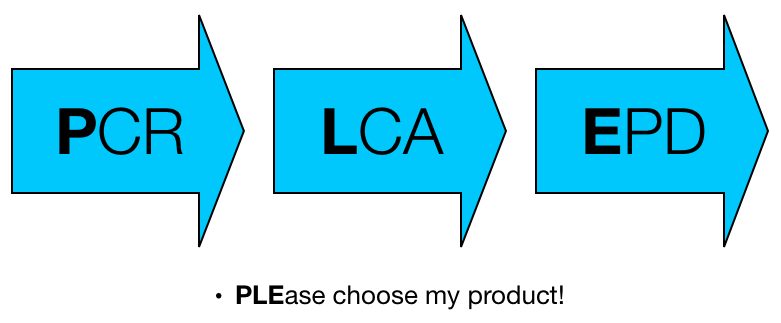
While EPD certification requires more rigorous scientific testing, and/or comprehensive auditing than validation, there is an old saying that nothing is worth more than its actual cost.
Reducing Confusion - Back to the Why of Green Product Certification
Greenwashing is the practice of deceptively marketing a company’s products or policies as environmentally friendly. The environmentalist Jay Westerveldt coined this term when he found one of those “Be Green” cards admonishing him to hang up and reuse the towels in his hotel room, way back in 1986. Those cards are still everywhere, even in legitimately “green” hotels, and it contributes to a big perception problem in defining what “green” means.
It wasn’t until 1992 that the Federal Trade Commission released their first “Green Guide” which offers guidelines on environmental claims. The guidelines boil down to 1) don’t exaggerate or lie about environmental claims, and 2) back up any claims you make with proof.
An example of a claim exaggeration would be receiving a statement from your bank that reads, “Go Paperless to Save the Environment.” An example of a lie would be claiming that a product is biodegradable when it isn’t or that it can achieve a specific level of environmental performance, when it cannot.
EcoBaby Organic Mattress vs. FTC
According to the FTC, EcoBaby Organics Inc. is a brash case of greenwashing. The FTC has pursued the company for its claims that its EcoBaby branded mattresses are formaldehyde and volatile organic compound (VOC) free, when they can not substantiate those claims.
EcoBaby mattresses are marketed online through sites like “EcoFriendOnline.com” and "thenaturalsleepstore.com" and can be found on well known sites like Amazon.com, although the references to no VOCs and/or formaldehyde are no longer there.
FTCs complaint also states that in its marketing, EcoBaby Organics Inc. prominently displayed the seal of the “National Association of Organic Mattress Industry” aka “NAOMI”, which EcoBaby claimed “Raises the standards of mattresses labeled as “Organic” to a higher level of purity than OEKO-Certified organic mattresses at present."
The FTC alleges that not only do EcoBaby Organics Inc’s mattresses not live up to their “no formaldehyde” and “no VOC” claims when subjected to testing, but also that NAOMI is not a third party organization and is actually owned by, or is an alter-ego of, EcoBaby Organics Inc.
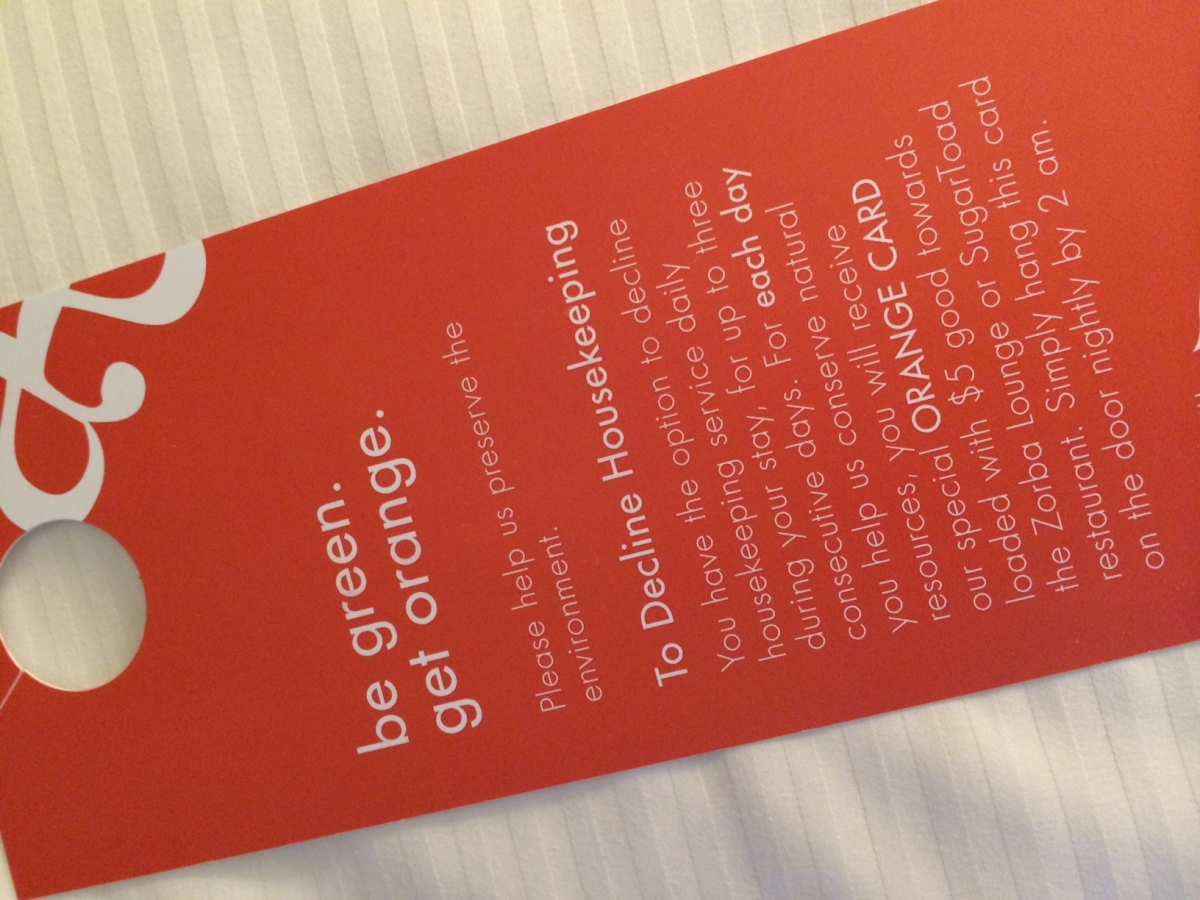 Greenwashing can happen to commercial businesses as well as consumers. Green product manufacturers can avoid greenwashing by following the FTCs guidelines and existing labeling rules put in place by ISO and ANSI.
For manufacturers marketing to the green building industry, by pursuing EPDs and LCAs, they can help reduce confusion in the marketplace.
---------
How many of you have found one of those cards in your hotel room or received one of those “Go Paperless” letters from your bank?
Do you really think the companies put the environment first in these efforts?
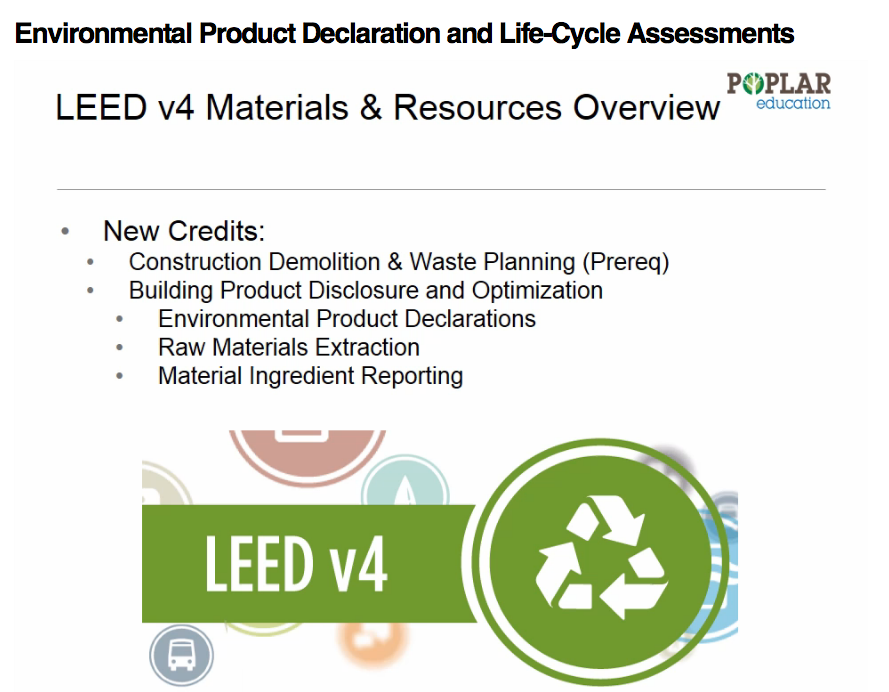
LEED v4 takes green products to the next level.
Learn about how Environmental Product Declarations (EPD) and Life Cycle Analysis (LCA) affects your green building product marketing process in this FREE training course for Poplar members.
Connect.
Find LEED consultants and professionals with green building skills and experience.
Meet Pros.


Learn.
Relevant education and training to consider.
News.


_itok-GdAYtPyq.JPG)

Why join Poplar Network?

- Learn about green building
- Save on LEED exam prep
- FREE continuing education
- Join the conversation
- Connect with peers