
Changes in Rapidly Renewable Materials and LEED v4


In LEED v4, the definition of rapidly renewable materials has changed. Here’s a straightforward description of what you need to know.
In LEED v4 the Materials and Resources credit category has changed more than any other credit category. In LEED 2009, MR credits were often heavily weighted on individual attributes of materials, such as recycled content, or rapid renewability. With LEED v4, USGBC has taken more of a lifecycle cost analysis approach to all the products and materials that comprise a building. The result should be a more complete picture for decision makers on project teams when determining the environmental benefits and human health impact of building materials.
Rapidly Renewable Materials in LEED 2009
In the broadest terms, rapidly renewable materials are those that regenerate more quickly than their level of demand. The intent behind the rapidly renewable materials credit in LEED 2009 projects is to reduce the use and depletion of finite raw materials and long-cycle renewable materials by replacing them with rapidly renewable ones.
In LEED 2009, using rapidly renewable materials was a great way to not only earn credits without considerable hassle, but also showcase the green aspects of your design. Using these materials often had the benefit of being highly visible in the end product.
Examples of rapidly renewable materials in LEED 2009 included cork, bamboo flooring, cotton batt insulation, linoleum flooring, sunflower seed board panels, wheatboard cabinetry, wool carpeting, cork flooring, bio-based paints, geotextile fabrics such as coir and jute, soy based insulation and form-release agent and straw bales. Some green building materials products are made of a merger of rapidly renewable materials and recycled content such as newsprint, cotton, soy-based materials, seed husks, etc. Learn more about biocomposite building material provider e2e Materials provides as an example.
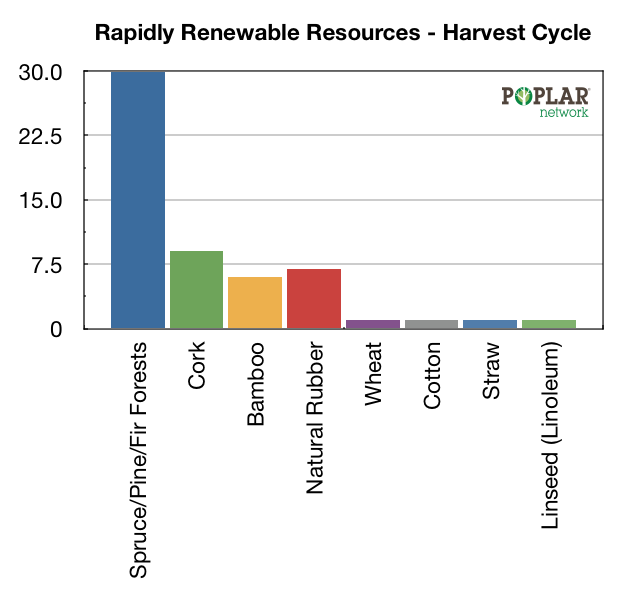
Under LEED 2009, rapidly renewable materials were defined by a harvest cycle of less than ten years. Some examples can be seen in the below chart which presents harvest cycles in years for various rapidly renewable materials.
Rapidly Renewable Materials in LEED v4
In LEED v4, the Materials and Resources credit 6 "Rapidly Renewable Materials" has been retired and replaced with "Building Product Disclosure and Optimization - Sourcing of Raw Materials". According to the LEED v4 reference guide for BD+C, the intent of this credit is to encourage the use of products and materials for which life cycle information is available and that have environmentally, economically and socially preferable life cycle impacts."
Per the LEED certification standard changes, biobased materials are no longer defined by the harvest cycle of the raw materials; instead products must meet the Sustainable Agriculture Standard to count toward this credit. In LEED v4 rapidly renewable materials are defined as natural, non-petroleum-based building materials that meet the Sustainable Agriculture Network Standard (note this is different than Leo 4000, which is currently in the public comment period for its "Sustainable Agriculture Standard").
According to USGBC, with the exception of wood products, which must be FSC Certified, bio-based products must be tested using ASTM Test Method D6866 and be legally harvested, as defined by the exporting and receiving country. Exclude hide products, such as leather and other animal skin material. Products meeting bio-based materials criteria are valued at 100% of their cost for the purposes of credit achievement calculation.
Remember that in order for purchases of rapidly renewable materials to count toward your certification, you’ll need to track purchases throughout construction and maintain detailed records of the relevant goods and materials. Wood and biobased materials, specifically, require additional documentation that may include either a letter from the manufacturer of proof of adherence to harvesting practices or complete FSC Chain of Custody documentation.
One noted benefit is that credit achievement calculations allow 200% value (in terms of cost) for products sourced (extracted, manufactured, purchased) within 100 miles of the project.
Connect.
Find LEED consultants and professionals with green building skills and experience.
Meet Pros.


Learn.
Relevant education and training to consider.
News.


Why join Poplar Network?

- Learn about green building
- Save on LEED exam prep
- FREE continuing education
- Join the conversation
- Connect with peers