
Fast 15 LEED Specific CEUs

Efficiency, Convenience and Expertise in a "Fast 15" CEU Package
- 15 LEED Specific CEUs in a Complete Package
- Efficiency - Your time is valuable. You can complete 100% of your LEED Green Associate CMP requirements (15 CEUs) in as few as five (5) hours! Compare that to other methods of LEED continuing education, such as online classes.
- Convenience - You want flexibility. You can use this program on any computer or tablet. Complete all the project credits very efficiently in one single session, or do one credit at a time at your own pace.
- Expertise - You'll be joining thousands of other LEED professionals from over 20 countries who trust Alex Spilger, founder of GreenStep Education, to guide you at each step along the way.
- Professional Applications - Many of our LEED project experience participants have successfully started their own LEED consulting practices and moved on to manage dozens of other LEED projects.
LEED v4 AP Preparation
You'll receive another benefit of the "Fast 15" package: Built in preparation for the LEED AP exam in LEED v4.
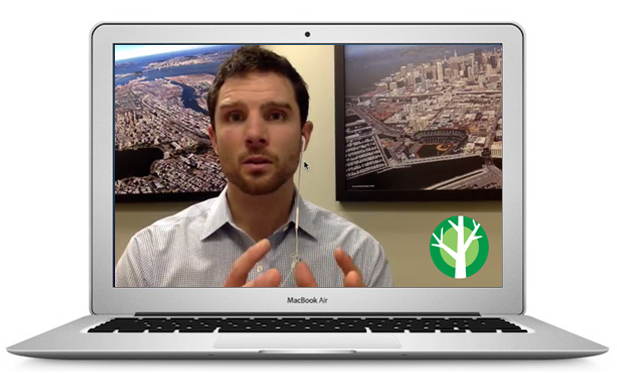
Unlike the LEED 2009 exams, which required fulfilling the project experience requirement by documenting work on a specific LEED registered project, the LEED v4 exams are gauging LEED project experience from within the exam itself.
In our experience managing over 100 LEED projects, the most critical skill on a LEED project (and for passing the LEED AP exam) is being able to perform LEED credit calculations, particularly for some of the more challenging LEED credits.
You'll document important LEED credits while we provide the guidance and support needed to ensure that you understand the concepts and processes involved. This credit-based approach translates well to a virtual platform since it does not require participants to engage with the rest of the team on a regular basis.
LEED 2009 vs. LEEDv4
USGBC has committed to continually updating the LEED Rating Systems every few years to adopt to new technologies, streamline the Certification process and increase the level of standards that projects must meet for each Certification level. The latest update to the LEED Rating Systems is LEED version 4 which launched in November 2013 and includes significant changes from LEED v2009.
While LEED v4 is officially up and running, LEED v2009 still remains current, relevant and widely popular. Projects will be able to continue to register under LEED v2009 through mid-2015 which means that LEED v2009 will likely remain relevant through 2017 and beyond for projects with longer schedules.
Most of the clients we are currently working with have opted to register their projects under LEED v2009, rather than LEED v4, since it is the more established Rating System and since the industry has not yet fully adapted to meet specific LEED v4 criteria for certain Credits.
LEED Specific CE for LEED Green Associate, BD+C, ID+C and O+M
You will not only participate in the LEED charrette which kicks off a LEED project, you will be tasked with completing several credit calculations for the project, which we simply refer to as “Project Assignments”. The Project Assignments that you’ll be given will include several components to help explain the work that needs to be accomplished and guide you through the process.
Each Project Assignment consists of the following:
- Introduction Video (start here for each assignment)
- Written Project Assignment including relevant project information
- Instructions for using LEED Reference Guide (if required)
- LEED Credit Template / Form (only provided if applicable)
- Additional resources such as energy model results where applicable
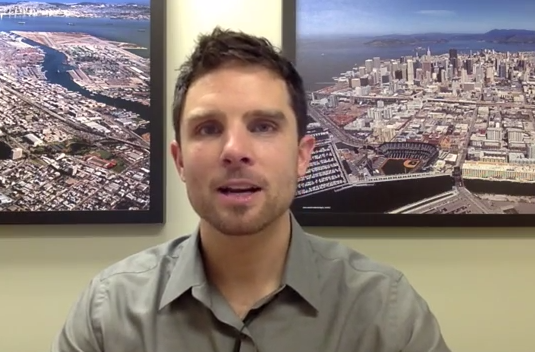
Project Assignments are meant to be challenging, but very doable regardless of your experience level and background. Most of the Project Assignments will require you to use the Reference Guide to find important information needed to complete the work such as: baseline standards, definitions of key terms, credit percentage thresholds, calculation methodology, equations and variables. Carefully reviewing the Reference Guide pages we provide can be invaluable for preparing for the exam since many of the test questions are derived from the credits we’ll be working on as part of the project (this is intentional on our part).
With the resources we provide, including the accompanying videos, our goal is give you the background information and tools necessary for you to complete the credit calculations. We want to provide enough information without actually completing the work for you. In this program you'll be working on solving challenging problems that you could face on any project utilizing BD+C, ID+C, O+M or ND. We examine the following credits:
-
LEED Charrette - 7 LEED Specific CEUs (BD+C): Establishing and refining an accurate LEED Roadmap is central to the success of any green building project and a well organized charrette provides the foundation and structure for this process to occur. A typical LEED charrette covers topics ranging from the percentage probability of achieving each credit and how the credit requirements might be met most effectively to who will be responsible for facilitating future discussions and keeping the team on track. You will participate in a LEED Charrette exercise for our project, evaluating how changes in our design will affect the probability of achieving various LEED credits in the Sustainable Sites, Water Efficiency, Materials & Resources and Indoor Environmental Quality sections. Upon completion of the exercise, you will have deeper knowledge of credit requirements and a better understanding of how different credits work in synergy with one another by examining credits in the Sustainable Sites and Materials and Resources categories.
-
Water Use Reduction - 2 LEED Specific CEUs (BD+C/ID+C): Americans use about 70% of their water inside their homes. The American Water Works Research Foundation performed a 1999 study in which they found that Americans use 26.7% of indoor water for toilets, 21.7% in clotheswashers, 16.8% in the shower, and 15.7% from faucets. Nearly 14% is attributed to leaks and 5.3% from other sources. LEED encourages using water efficient appliances as well as replacing potable water use with recycled graywater or rainwater.
-
Water Efficient Landscaping - 1 LEED Specific CEU (BD+C, ID+C, O+M): According to the U.S. Environmental Protection Agency (EPA), outdoor water use makes up one-third of residential water use, or approximately 9 billion gallons of water per day. About 50% of this water is wasted because of inefficient watering methods and irrigation systems. In a commercial setting, a building can use up to one third of its drinking (potable) water for irrigation. LEED rewards projects that reduce potable water use for irrigation through conservation or by using non-potable water.
-
Energy Modeling - 2 LEED Specific CEUs (BD+C, ID+C and O+M): The energy modeling process is critical to any LEED BD+C project and is worth more LEED points than any other credit. LEED looks at the reduction in energy cost, not just energy usage, and encourages projects to use advanced modeling guidelines outlined in ASHRAE Appendix G. Green power refers to purchasing renewable energy from a third party, not through on-site renewable sources. Projects that do not want to install on-site renewable energy can buy green power which can offset some or all of the carbon emissions generated by a building. In LEED 2009, LEED awards two (2) points for projects that engage in at least a 2 year contract with a green power provider. The contract must meet at least 35% of the building's energy needs, either determined by the annual electricity consumption determined by a whole building energy simulation, or the U.S. Department of Energy's Commercial Buildings Energy Consumption Survey (CBECS). LEED encourages projects to purchase renewable energy generated by a reputable company or organization.
-
Recycled Content - 1 LEED Specific CEU (BD+C, ID+C, O+M): Specifying high-recycled content materials reduces the demand on raw materials while at the same time reducing the waste stream. On LEED projects, specifying recycled content materials is the easy part; tracking and documenting the pre and post consumer recycled content of each product can be a challenge. As part of our project team, you will be assisting the contractor with calculating the recycled content dollar value that will be applied toward the project for the concrete mix, one of the higher-cost materials on the project. Upon completion, you will have an understanding of how to document the various materials purchasing credits on any type of LEED project.
-
Lighting Power Reduction - 2 LEED Specific CEUs (BD+C, ID+C): Lighting power density is the Watts of lighting per square foot (psf) of room floor area (W/sf). By reducing lighting power density through better lighting design and more efficient fixtures, a project can save a great deal of energy. Lighting makes up 12% of electricity consumption in the U.S., making it an important component of energy efficient building. LEED aims to control energy use for lighting by requiring reduced lighting density.
-
Daylight and Views - 1 LEED Specific CEU (BD+C, ID+C, O+M): Daylighting, or natural lighting provided by the sun, and views of the outdoors are important components of green building because they contribute to improved indoor environmental quality. Indoor areas with natural light are shown to improve occupant health and productivity. LEED rewards projects with spaces that have these characteristics.
Each credit is introduced to you in video form and presented personally by Alex using language you can understand, along with the intent and strategies for achieving it.
In this program you'll be working on solving challenging problems that relate to all types of LEED projects including BD+C, ID+C, O+M, Homes and ND.

About the LEED Consultant
Alex Spilger is Principal and Founder of GreenStep Education. Throughout the program, Alex guides you along the way as you prepare and gain the skills and understanding to not only pass the LEED exam, but also to build upon a foundation for a successful career in the green building industry. He has worked on over 100 diverse LEED projects, including the first LEED v4 project in San Francisco.
In addition to his project experience, Alex is a world renowned LEED exam trainer, having taken and passed various versions of the LEED exams over a dozen times and delivered over 300 LEED training workshops through organizations such as local chapters of USGBC, American Institute of Architects (AIA), the Sustainable Building Advisors Program and the UC Berkeley Haas School of Business, among others. His corporate clients include Waste Management, Hewlett Packard, Google, Skype, Salesforce.com, Twitter, Oracle and others.
Alex is an active member of the Northern California Chapter of USGBC and serves on the USGBC Corresponding Committee for LEED EBOM. He is also a founding member of GreenLaces.org, a non-profit committed to leveraging the visibility and influence of athletics to create positive change for the planet. Alex is a LEED AP with specialties in BD+C, ID+C and EBOM. He is a USGBC NCC faculty member, a Certified Green Building Professional, an AIA Continuing Education Provider and HERS Rater. He holds a B.S. in Civil Engineering from UCLA.
---