
Birdi: Fulfills LEED v4 IEQ Monitoring Requirements?


Birdi can help fulfill LEED v4 for Homes indoor environmental quality monitoring requirements.
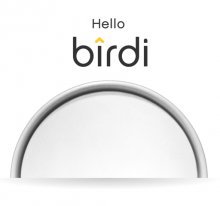
Birdi, an elegant, wall-mounted air quality monitor being crowd funded on Indiegogo, an entrepreneurial platform for raising capital for new projects (similar to Kickstarter), would help LEED projects with residential units fulfill the IEQ (Indoor Environmental Quality) prerequisite “Minimum Indoor Air Quality Performance”.
Indoor air quality monitoring is important because, as we know from the EPA, levels of indoor pollutants can be up to 100 times greater than outdoor levels. Specifically, LEED v4, the newest version of LEED recently launched at Greenbuild 2013, requires carbon monoxide monitors to be installed on each floor of each residential unit. The intent of Credit “Minimum Indoor Air Quality Performance” in LEED v4 is to contribute to the well-being of building occupants by establishing minimum standards for indoor air quality (IAQ). The LEED prerequisite requirements state that if the project building contains residential units, each dwelling unit must have carbon monoxide monitors installed on each floor of each unit.
The Birdi team states that CO monitors should be placed at ceiling height, not 1-2 feet above the floor, as is common. While carbon monoxide (CO) monitors are required in LEED, the Birdi project offers additional protection for indoor air quality monitoring. According to the project description, Birdi can monitor carbon monoxide (CO), carbon dioxide (CO2), particulate matter (such as mold and smoke), and even humidity levels.
More Than a CO Monitor
As a smoke alarm, the Birdi uses a photoelectric sensor, which uses a beam of light to detect smoke. The Birdi project website states that the use of photoelectric sensors is an improvement over conventional smoke detectors, which (I had no idea) apparently have an ionization chamber inside that uses radioactive material to detect small particles entering the chamber. Because the ionization chambers were originally designed to detect heat, not smoke, they may not respond as quickly as photoelectric sensors in smoldering fire situations.
According to the Birdi team, research done by the National Institute of Standards and Technology (NIST) has shown that during a flame ignition fire, the photoelectric smoke detector has only a 3.99% probability of a failure to detect the fire whereas the ionization detector probability of failure is as high as 19.8%. From the NIST website, the “The photoelectric alarm responded quicker on average than ionization alarm in two of four smoldering fire configurations, responding before the ionization alarm in all 6 trials, while the ionization alarm responded before the photoelectric alarm in two of three trials for the other two configurations. The ionization alarm responded quicker on average than photoelectric alarm in all four flaming fire configurations, and responded before the photoelectric alarm in all 12 flaming fire trials. One dual alarm had the fastest average alarm time for all four smoldering fire configurations, and responded first in 11 of the 12 trials. It also yielded faster average alarm times than the other dual alarm in seven of eight configurations, and was the first dual alarm to respond in 22 out of 23 trials where dual alarms were present.” So, it seems as though a dual alarm might work best to cover all your bases. However, the Birdi team claims that the home fires are more often of the smoldering, than the flaming, variety.
The team behind the Birdi also claims that the product can help avoid “sick building syndrome” by monitoring and offering tips on improving air-flow. The EPA cites contributing factors to sick building syndrome include inadequate ventilation, chemical contaminants (such as VOCs), stale air and biological contaminants.
Connect.
Find LEED consultants and professionals with green building skills and experience.
Meet Pros.


Learn.
Relevant education and training to consider.
News.


Q&A.

Why join Poplar Network?

- Learn about green building
- Save on LEED exam prep
- Gain continuing education
- Join the conversation
- Connect with peers