- Home
- Directory
- Topics
- Energy & Atmosphere
- C-PACE
- Demand Response
- Energy Audits
- Energy Management System
- Energy Storage
- Fuel Cell
- Geothermal Heating
- Green Power
- HVAC
- High Efficiency Furnace
- High Efficiency Water Heater
- Insulation
- LED Lighting
- Lighting Controls
- Lighting Power Reduction
- Lighting Retrofit
- On-Site Renewable Energy
- Optimize Energy Performance
- Renewable Energy Supplier
- Solar Attic Fan
- Solar Photovoltaics
- Solar Pool Heater
- Solar Thermal
- Small Wind
- Smart Thermostat Installation
- Zero Energy Buildings
- Green Building Rating Systems
- Green Business and Careers
- Green Data Centers
- 179d Green Building Tax Deduction
- Additions & Remodels
- Architectural Design
- Commissioning
- Conscious Capitalism
- Green Building Insurance
- Green Commercial Buildings
- Green Homes
- Green Manufacturing
- Green Marketing
- Green Risk Management
- Green Jobs
- Health and Physical Activity
- Interior Design
- Property Assessed Clean Energy (PACE)
- Telecommuting
- Tiny House
- Vertical Farming
- Green Credentials
- Indoor Environmental Quality
- Location and Transportation
- Materials & Resources
- Sustainable Sites
- Water Efficiency
- Energy & Atmosphere
- Q&A
- News
- Education
- FAQ
- Contact Us

Steelcase was First to LEED in Manufacturing


Furniture manufacturer's wood finishing plant was the first industrial manufacturing facility to be certified under the LEED® (Leadership in Energy and Environmental Design) green building rating system.
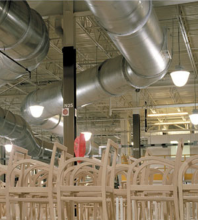
Steelcase implements an Indoor environmental quality system
How did they do it?
Steelcase achieved LEED certification by implementing strategies under five LEED categories—energy and atmosphere, indoor environmental quality, sustainable sites, water efficiency, and materials and resources, as described below.
This included converting the facility's finishing lines to water-based finishing, which reduced VOC emissions, and installing a Johnson Controls Metasys building management air monitoring system.
One of Steelcase’s Core Values.
Protecting the environment is of great importance to Steelcase, and one of the company's core values. When the world’s largest office furniture manufacturer was preparing its new 13.8-acre wood finishing division plant, located on 62 acres in Caledonia, Mich., which was designed by William McDonough + Partners, it was the first project of its type and size to be rated by LEED.
The project provided the perfect opportunity for the company to not only address space constraints but also to incorporate its environmentally friendly mission.
The wood finishing plant achieved U.S. Green Building Council’s Leadership in Energy and Environmental Design (LEED®) way back in 2001— up to that point, the LEED program did not have a method for manufacturing facilities to be certified.
“We had some initial concerns on whether we could even achieve a LEED certification since the program was really written around commercial office buildings,” said Steelcase Director of Global Environmental Performance Dave Rinard.
USGBC worked with Steelcase to adapt the program to become more germane to a manufacturing plant.
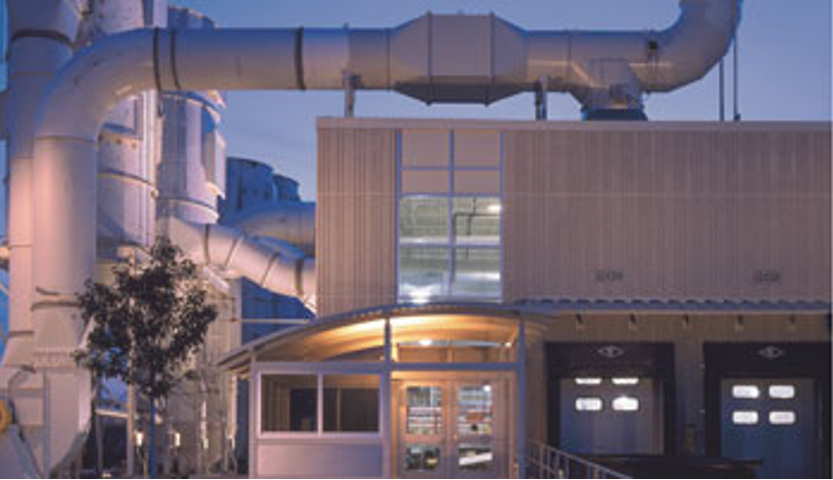
The plant accumulated 33 points to achieve LEED silver certification. It did so by implementing the following strategies under five LEED categories—energy and atmosphere, indoor environmental quality, sustainable sites, water efficiency, and materials and resources:
Indoor environmental quality
- Converted to water-based finishing lines that reduced VOC emissions by as much as 70 percent.
- Implemented an indoor air quality (IAQ) management, including installing a Johnson Controls Metasys building management permanent air monitoring system, the installation of intake fans.
Sustainable sites
- Reduced heat island effect by planting 958 trees to shade impervious surfaces.
- Reduced habitat disturbance by setting aside more than 30 acres of prairie grass, low maintenance grass and ponds.
- Restored site by reusing topsoil and planting native trees and plants.
- Provided alternative transportation and fuels by constructing bicycle lock-up areas, showers, and electric refueling stations.
Water efficiency
- Installed low-flow fixtures that use 34 percent less water
- Installed new cooling tower that reduces drift and evaporation
- Water Recovery: Installed roof and groundwater collection system for water recovery that provides 10 percent of landscape irrigation needs
Energy and atmosphere
- Installed energy-efficient lighting that meets California’s Title 24 lighting requirements
- Implemented a waste heat recovery system that captures 88 percent of waste heat which is redistributed as building heat
- Used all low-VOC or water-based paints, sealants, primers and pipe joints in the building’s construction
Materials and resources
- Used recycled structural steel produced locally
- Eliminated CFCs, CFs, and halons by substituting refrigerant 134A in the chiller. These pollutants were also eliminated from fire suppression system, insulation, adhesives, carpet tiles and other cooling systems
- Established a recycling rate of 75 percent
----
This article was republished with permission by the Sustainable Manufacturer Network, an affiliate of the Fabricators & Manufacturers Association, International®, which owns the copyright. Reprinting is prohibited unless permission is expressly granted.
Connect.
Find members with green building and green business skills and experience.
Meet Pros.

Learn.
Relevant education and training to consider.
News.


Why join Poplar Network?

- Full Year Professional/Business Listing
- Professional Q&A Service
- Save on Exam Prep and CE
- FREE 9.5 Hour LEED CE pack
- Exclusive Industry Discounts
- Connect with Peers